
If your bread machine keeps turning out short, dense, or sunken loaves, the machine may not be the problem. Very often, it’s the flour. A bread machine kneads for a fixed time and can’t “feel” the dough the way you can, so the flour has to do more of the work.
To find the best flour for bread machine baking, we compared protein levels printed on the bags, manufacturer guidance, recipes from trusted baking sources, and patterns in verified buyer reviews from people who bake in machines every week.
Our quick picks:
- Best overall: King Arthur Unbleached Bread Flour
- Best whole wheat: King Arthur White Whole Wheat Flour
- Best booster: Bob’s Red Mill Vital Wheat Gluten
Quick Comparison: Best Flour for Bread Machine Loaves
| Flour | Protein | Best for | Machine cycle |
|---|---|---|---|
| King Arthur Unbleached Bread Flour | 12.7% | Best overall | Basic / White, French, Dough |
| Bob’s Red Mill Artisan Bread Flour | about 12.5–13.5% | Chewy, crusty loaves | Basic, French, Dough |
| Gold Medal Bread Flour | about 12% | Budget everyday loaves | Basic / White |
| King Arthur Unbleached All-Purpose Flour | 11.7% | Sweet breads, soft rolls | Sweet, Quick, Dough |
| King Arthur White Whole Wheat Flour | about 13% | Mild whole wheat loaves | Whole Wheat |
| Bob’s Red Mill Vital Wheat Gluten | about 75–80% | Boosting rise | Any (add-in) |
| King Arthur Gluten-Free Bread Flour | n/a | Gluten-free loaves | Gluten-Free |
Why Flour Matters More in a Bread Machine
When you knead by hand, you can add a little more flour, knead a few extra minutes, or give the dough more time to rise. A bread machine can’t do any of that. It runs the same program every time: knead, rise, punch down, rise again, and bake.
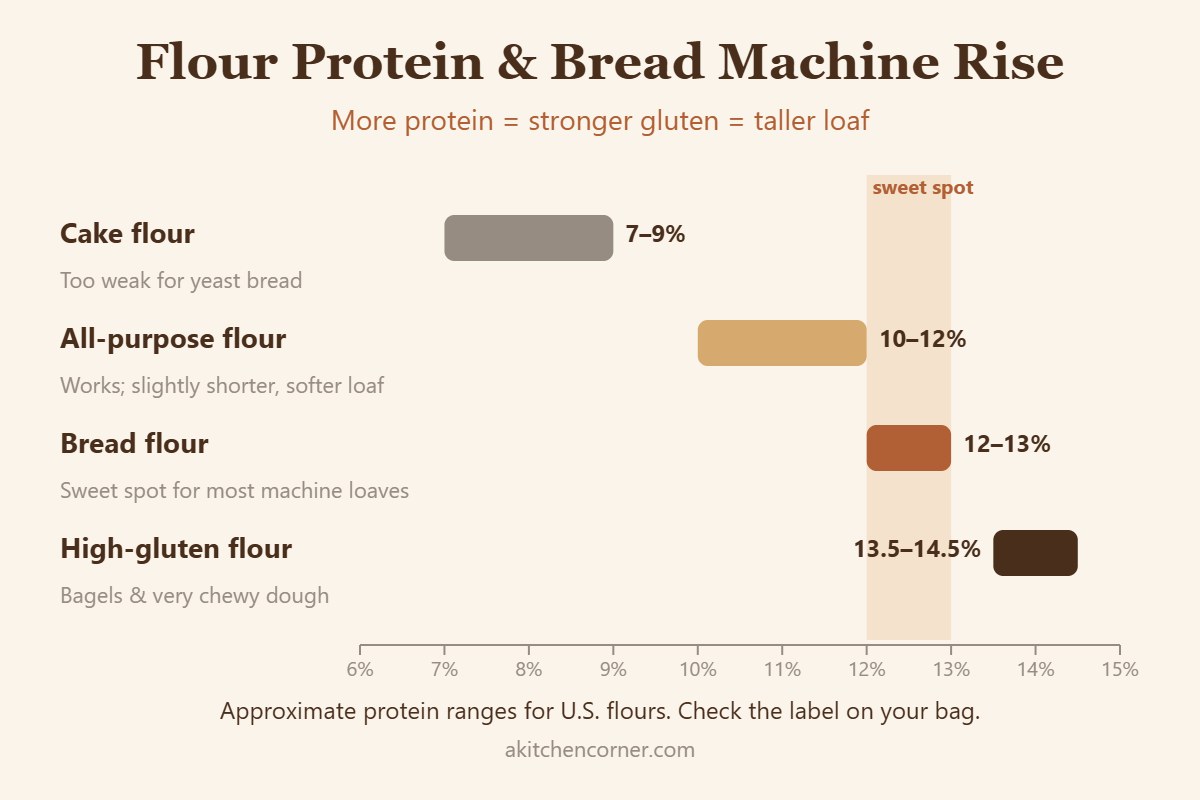
That’s why protein matters so much. When flour meets water, two proteins form gluten, the stretchy network that traps gas from the yeast. More protein usually means stronger gluten, and stronger gluten means a taller loaf that holds its shape when the machine switches to baking.
For most bread machine loaves, the sweet spot is flour with about 12–13% protein. That’s what most U.S. bread flours offer. All-purpose flour usually sits around 10–12%, so it can work, but the loaf is often a little shorter and softer.
A few other things matter too:
- Unbleached vs. bleached: both work, but many bakers prefer unbleached flour for flavor. Bleached flour is often lower in protein.
- Consistency: a flour with a tight protein spec gives you the same loaf week after week, which matters when you can’t adjust the dough by hand.
- Freshness: whole grain flours go stale faster because of the oils in the germ.
How We Chose These Flours
We haven’t run lab tests on these flours. Instead, we built this list from:
- Protein levels printed on the bag or published by the brand
- Guidance and recipes from trusted baking sources, like King Arthur Baking
- Patterns in verified buyer reviews, focused on people who use these flours in bread machines
- Easy to find in U.S. grocery stores and online
- What bread machine manuals recommend, since most of them call for bread flour on the basic cycle
The 7 Best Flours for Bread Machines
1. King Arthur Unbleached Bread Flour – Best Overall
Quick take: If you buy only one bag for your bread machine, make it this one. It’s the flour many bread machine recipes are written around.
At 12.7% protein, King Arthur’s bread flour sits right in the sweet spot for machine loaves. The company says it’s selected for high-rising yeast breads, and it’s milled to a tight protein spec, so results stay consistent from bag to bag.
Why it stands out:
- Strong rise on the basic and French cycles
- Works well for pizza and roll dough on the Dough cycle
- Unbleached, with no added bromate
- Easy to find in most U.S. grocery stores
Pros:
- Very consistent protein level
- Taller, airier loaves than most all-purpose flours
- Great all-around flour for machines
Cons:
- Costs more than store brands
- Slightly chewy texture may be too much for soft sandwich bread lovers
Best for: anyone who bakes white, French, or Italian bread in a machine and wants reliable results.
2. Bob’s Red Mill Artisan Bread Flour – Best for Chewy, Crusty Loaves
Quick take: A high-protein unbleached bread flour that’s great when you want a little more chew and structure.
Bob’s Red Mill lists its Artisan Bread Flour at roughly 12.5–13.5% protein. That gives it slightly more strength than some other bread flours. It shines on the French cycle and in dough you’ll shape and bake in the oven, like baguettes or pizza.
Why it stands out:
- High protein for strong gluten
- Unbleached and unbromated, with a little malted barley flour
- Good for crusty, rustic loaves
Pros:
- Excellent rise and structure
- Strong enough to carry add-ins like seeds or dried fruit
- Widely available
Cons:
- Can make very chewy sandwich bread
- Dough may need 1–2 teaspoons of extra water
Best for: bakers who like chewy, crusty bread and use the Dough cycle often.
3. Gold Medal Bread Flour – Best Budget Pick
Quick take: A dependable, lower-cost bread flour for everyday loaves.
Gold Medal’s bread flour is usually listed at about 12% protein. That’s a little lower than King Arthur, but still enough for a good rise in most machines. It’s a smart choice if you bake several loaves a week and want to keep costs down, especially in an everyday machine like the ones in our Hamilton Beach bread maker review.
Why it stands out:
- Budget-friendly price per pound
- Easy to find in large bags
- Good results on the basic cycle
Pros:
- Great value for frequent bakers
- Reliable rise for sandwich bread
- Softer crumb than higher-protein flours
Cons:
- Slightly lower protein than premium brands
Best for: families who bake daily sandwich bread on a budget.
4. King Arthur Unbleached All-Purpose Flour – Best All-Purpose Option
Quick take: The strongest all-purpose flour you’ll find in most stores, and a good backup when you’re out of bread flour.
At 11.7% protein, King Arthur’s all-purpose flour is higher than many all-purpose brands. That makes it a solid choice for sweet breads, cinnamon rolls, dinner rolls, and quick breads, where you want a softer, more tender crumb.
Why it stands out:
- Higher protein than most all-purpose flours
- Works for both yeast breads and quick breads
- Tight protein spec for consistent results
Pros:
- One bag covers bread, cookies, and cakes
- Soft, tender texture in sweet loaves
- Good in the Quick or Cake cycle
Cons:
- Loaves rise a little less than with bread flour
- May need vital wheat gluten for tall sandwich bread
Best for: home bakers who want one flour for everything, and anyone baking sweet or enriched breads.
5. King Arthur White Whole Wheat Flour – Best Whole Wheat Flour
Quick take: All the fiber of whole wheat, with a milder flavor and lighter color that’s easier to love.
White whole wheat is milled from hard white wheat instead of red wheat. It’s still a 100% whole grain flour, but it tastes less bitter and looks lighter. King Arthur lists it at about 13% protein.
Whole wheat dough is heavier and rises more slowly, so use your machine’s Whole Wheat cycle. If you need a machine that handles whole grain dough well, see our guide to the best bread machine for whole wheat bread.
Why it stands out:
- 100% whole grain with a mild taste
- Kids and picky eaters often prefer it
- Easy to blend with bread flour
Pros:
- More fiber and nutrients than white flour
- Lighter color and flavor than regular whole wheat
- Good for 50/50 blends
Cons:
- Rises less than white bread flour
- Goes stale faster (store it in the fridge or freezer)
Best for: families who want healthier bread without a strong wheat flavor.
6. Bob’s Red Mill Vital Wheat Gluten – Best Booster
Quick take: Not a flour on its own, but the easiest fix for short, dense loaves.
Vital wheat gluten is almost pure wheat protein, about 75–80%, according to the brand. Adding a small amount gives all-purpose or whole wheat flour the strength of bread flour. It’s especially helpful in whole wheat and multigrain loaves, where bran gets in the way of gluten.
Why it stands out:
- Turns all-purpose flour into a stronger bread flour
- Helps whole wheat loaves rise taller
- A bag lasts a long time
Pros:
- Small amounts make a big difference
- Works in any bread machine cycle
- Cheaper than switching flours
Cons:
- Too much makes bread rubbery
- Not for anyone who avoids gluten
Best for: whole wheat bakers and anyone who only keeps all-purpose flour at home.
7. King Arthur Gluten-Free Bread Flour – Best Gluten-Free Flour
Quick take: A gluten-free flour made specifically for yeast breads.
Most gluten-free blends are made for cookies and cakes. This one is designed for yeast breads like sandwich loaves, bagels, and buns. The bag says you can swap it 1:1 for wheat flour in bread recipes, adding 2–3 tablespoons more liquid per cup.
Two important notes:
- It’s made with gluten-free wheat starch, so the label says “Contains: wheat.” It’s not a fit for people with a wheat allergy.
- Buyer reports on bread machine use are mixed. Use your machine’s Gluten-Free cycle and follow a recipe written for a bread machine.
For machines that handle gluten-free dough best, see our guide to the best bread machine for gluten-free bread.
Pros:
- Made for yeast breads, not cakes
- Softer, more bread-like texture than many blends
- Easy 1:1 swap in many recipes
Cons:
- Contains wheat starch (not for wheat allergies)
- Pricier than wheat flour
- Results in machines vary
Best for: gluten-free bakers who want a loaf that looks and slices like regular bread.
Bread Flour vs. All-Purpose Flour in a Bread Machine
Here’s the short answer: bread flour gives you a taller, chewier loaf. All-purpose flour gives you a slightly shorter, softer one. Both will work in a bread machine.
| Bread flour | All-purpose flour | |
|---|---|---|
| Protein | about 12–13% | about 10–12% |
| Rise | taller, stronger | a bit shorter |
| Texture | chewier, more open | softer, more tender |
| Best for | white, French, pizza dough | sweet breads, rolls, quick breads |
If a recipe calls for bread flour and you only have all-purpose, you have two easy options:
- Add vital wheat gluten. A common rule is about 1 to 1½ teaspoons per cup of all-purpose flour. Add 1–2 teaspoons more water, too, because gluten absorbs liquid.
- Use it as is. Your loaf will be a little shorter and softer, but still good. Check the dough after 5 minutes of kneading. If it looks wet and sticky, add flour 1 tablespoon at a time.
Matching Flour to Your Bread Machine Cycle
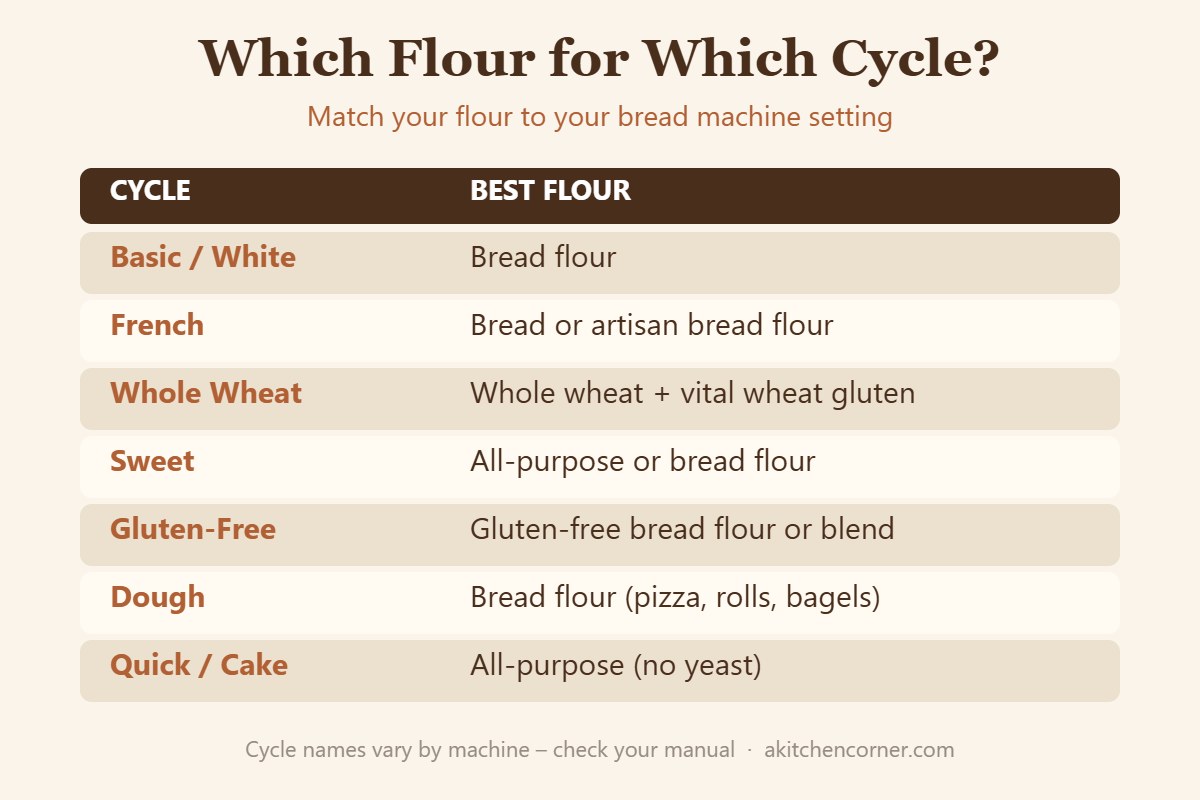
Your machine’s cycles are built for different doughs. Pair the right flour with the right setting:
| Cycle | Best flour | Tip |
|---|---|---|
| Basic / White | Bread flour | The everyday choice for sandwich bread |
| French | Bread flour or artisan bread flour | Longer rise, crispier crust |
| Whole Wheat | Whole wheat or white whole wheat | Add vital wheat gluten for 100% whole wheat |
| Sweet | All-purpose or bread flour | Sugar and butter slow yeast, so don’t skimp on rise time |
| Gluten-Free | Gluten-free bread flour or blend | Never mix wheat flour into a gluten-free loaf |
| Dough | Bread flour | Best for pizza, rolls, and bagels |
| Quick / Cake | All-purpose | No yeast, so high protein isn’t needed |
If you make a lot of pizza dough, our list of the best bread machines for pizza dough covers which machines have the strongest Dough cycles. If you only need dough and not baked loaves, a dedicated mixer may suit you better. See our guide to the best dough kneading machine.
Tips for Better Bread Machine Loaves
The right flour is the first step. These habits make the biggest difference after that:
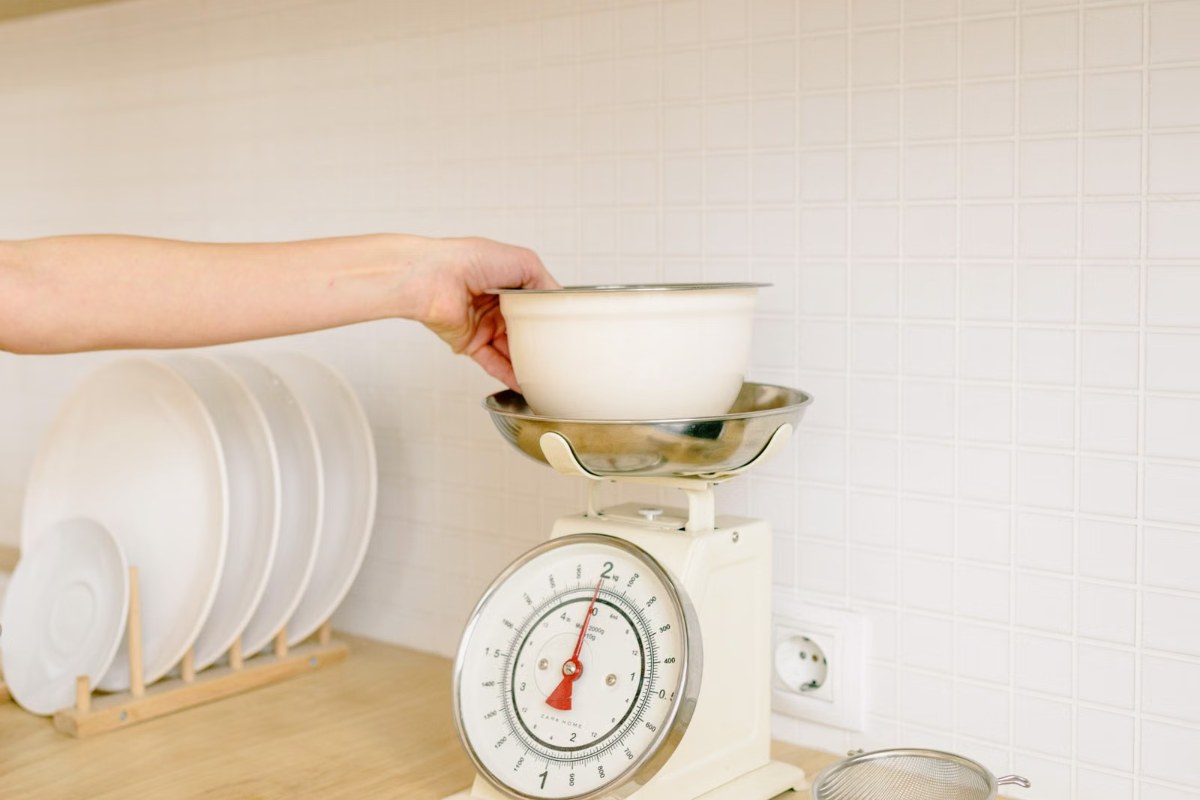
- Weigh your flour. King Arthur counts a cup of all-purpose flour as 120 grams. Scooping straight from the bag can pack in 20 grams or more extra per cup, which makes a dry, dense loaf. If you don’t have a scale, spoon flour into the cup and level it off.
- Follow your machine’s order. Most machines want liquids first, then flour, then yeast on top. Some (like many Zojirushi models) are different, so check your manual.
- Check the dough early. After about 5 minutes of kneading, the dough should form a smooth ball that’s slightly tacky. Too wet? Add flour a tablespoon at a time. Too dry? Add water a teaspoon at a time.
- Use room-temperature ingredients unless you’re using the delay timer.
- Store flour well. Keep white flour in an airtight container. Keep whole wheat flour in the fridge or freezer to stop it from going rancid.
On a budget? Even a lower-cost machine bakes a great loaf with good flour. See our picks for the best bread machine under $100.
FAQ
Can you use all-purpose flour in a bread machine?
Yes. All-purpose flour works in a bread machine, but the loaf usually comes out a little shorter and softer than one made with bread flour. For a taller loaf, add about 1 to 1½ teaspoons of vital wheat gluten per cup of all-purpose flour.
Is bread machine flour different from bread flour?
Not really. Flour sold as “bread machine flour” is usually a high-protein white flour, similar to regular bread flour. Some versions include a little malted barley flour or added gluten. Regular bread flour works just as well.
Do I need vital wheat gluten in a bread machine?
Not for white bread made with bread flour. It helps most with 100% whole wheat, rye, and multigrain loaves, or when you only have all-purpose flour.
Can I use self-rising flour in a bread machine?
Not for yeast bread. Self-rising flour already contains baking powder and salt, which throws off yeast recipes. You can use it on the Quick or Cake cycle for recipes that call for it.
Why is my bread machine loaf dense or short?
The most common causes are too much flour (from scooping instead of weighing), low-protein flour, old yeast, or using the wrong cycle for whole wheat dough. Start by weighing your flour and switching to bread flour.
Final Thoughts
For most bread machine bakers, King Arthur Unbleached Bread Flour is the best flour for bread machine loaves. It has the right protein level, it’s consistent, and it’s easy to find. Keep a bag of vital wheat gluten on hand for whole wheat loaves, and use white whole wheat flour when you want more fiber with a milder taste.
Still choosing a machine? Our Zojirushi bread maker review and Cuisinart bread maker review are good places to start.
Leave a Reply