
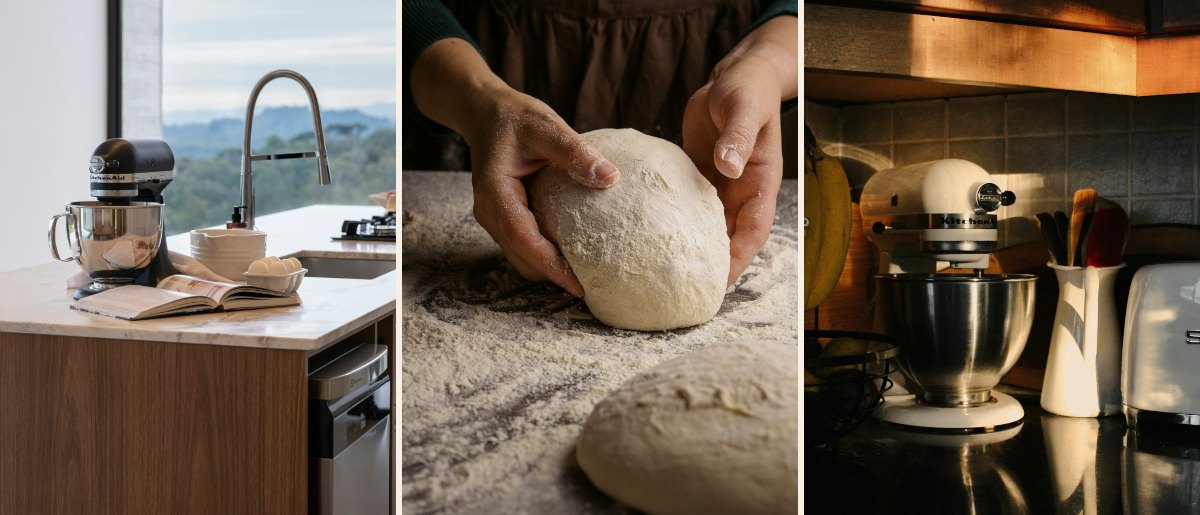
A stand mixer with a dough hook takes the hardest part out of bread baking. But “knead until smooth and elastic” isn’t much help when you’re standing next to the mixer wondering whether it’s been long enough. Knead too little and the loaf is dense. Knead too long in a budget mixer and you risk overheating the motor or the dough.
The short answer: most bread dough needs about 6–10 minutes on low speed with a dough hook. Below, we give times for different types of dough, the right mixer speeds, and the simple tests that tell you when to stop.
Kneading Times by Dough Type
| Dough Type | Typical Time With Dough Hook | Speed |
|---|---|---|
| Basic white sandwich bread | 6–8 minutes | Low (speed 2 on many mixers) |
| Pizza dough | 5–8 minutes | Low |
| Enriched dough (brioche, challah, cinnamon rolls) | 8–12 minutes, plus extra after adding butter | Low to medium-low |
| Whole wheat dough | 8–10 minutes, often with a rest in the middle | Low |
| High-hydration dough (focaccia, ciabatta) | 5–10 minutes, until it pulls from the bowl | Low, then medium-low briefly |
| Bagel dough (stiff) | 8–10 minutes, in rounds | Lowest |
| Pasta dough | 5–8 minutes | Low |
These are starting points. Flour, hydration, batch size and your mixer all affect the time, so always finish with the tests below.
Rule of thumb: a stand mixer kneads faster than hands. If a recipe says “knead by hand for 10–15 minutes,” expect about 6–8 minutes in a mixer.
Which Speed Should You Use?
Always knead on low. Most mixer manuals recommend a low setting (often speed 2) for dough hooks. Higher speeds:
- Don’t build gluten faster in a meaningful way
- Heat the dough and the motor
- Make the mixer bounce and “walk” on the counter
- Put extra strain on the gears, especially in budget mixers
Use the lowest speed to bring the ingredients together for the first minute, then the low kneading speed your manual recommends.
How to Tell When the Dough Is Ready
1. It Looks Smooth and Pulls Away From the Bowl
Well-kneaded dough gathers around the hook and cleans the sides of the bowl, leaving only a small patch stuck to the bottom. It looks smooth, not shaggy or lumpy. (Very wet doughs like focaccia may never fully clear the bowl.)
2. The Windowpane Test
Pinch off a walnut-sized piece and gently stretch it between your fingers. If it stretches thin enough to let light through without tearing, the gluten is well developed. If it tears quickly, knead for another 1–2 minutes and test again.
Whole wheat and rye doughs won’t form a perfect windowpane because bran cuts the gluten. For those, look for dough that stretches reasonably before tearing.
3. The Poke Test
Press a finger into the dough. If it springs back slowly, it’s ready. If the dent stays, knead a little longer.
4. Dough Temperature (Optional)
Ideal dough temperature after kneading is about 75–78°F (24–26°C). If it’s above about 80°F, the mixer has heated it, and the rise will be faster than the recipe expects.
Signs of Under-Kneading
- Dough tears easily and looks lumpy
- It doesn’t hold its shape when you form a ball
- The baked loaf is dense with a tight, uneven crumb
Fix: knead longer, 1–2 minutes at a time, and test again.
Signs of Over-Kneading
Over-kneading is hard to do by hand but possible with a powerful mixer:
- Dough becomes very tight and resists stretching, then tears
- It may turn sticky and slack again as the gluten breaks down
- The baked loaf is dense and dry, or flat
Fix: you can’t undo it, but you can let the dough rest and bake it anyway. Next time, stop sooner and check more often.
Tips for Kneading in a Budget Stand Mixer
Budget mixers do a good job with bread dough, but they have less margin than heavy-duty models. These habits help:
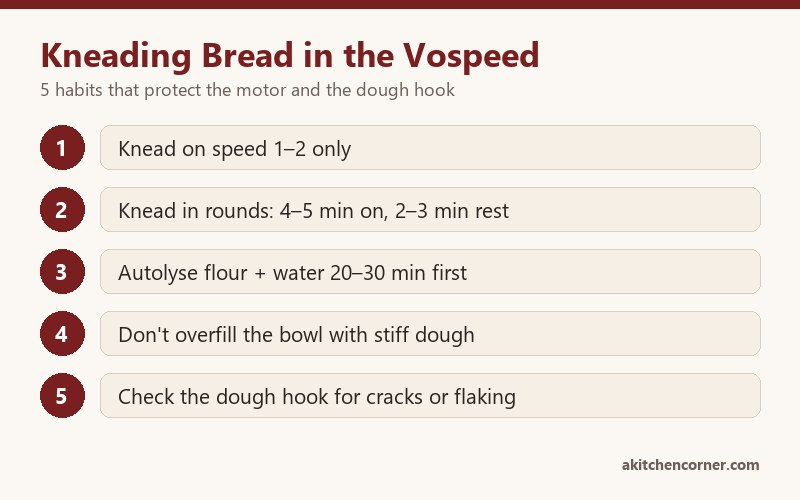
- Knead in rounds: 4–5 minutes, rest 2–3 minutes, then repeat.
- Use an autolyse: mix flour and water and let it rest 20–30 minutes before adding salt and yeast and kneading. Gluten starts forming on its own, so kneading time drops.
- Don’t overfill the bowl with stiff dough. Follow your mixer’s flour capacity.
- Watch the mixer: if it shakes, smells hot or the head bounces, stop and let it rest.
- Add butter gradually to enriched doughs, a piece at a time, after the dough has formed.
For more on which mixers handle bread dough best, see our guide to the best budget stand mixer for bread dough.
What if the Dough Climbs the Hook?
Dough climbing up the hook is common, especially with C-shaped hooks and small batches.
- Stop the mixer and push the dough back down with a spatula
- Make sure the batch isn’t too small for the bowl
- Check hydration: slightly stiffer dough climbs more
- A spiral-style hook climbs less than a C-hook
If your dough is sticking everywhere instead, read our guide on how to fix sticky dough.
Frequently Asked Questions
How long should I knead bread dough in a stand mixer?
About 6–10 minutes on low speed for most bread dough. Enriched and whole wheat doughs may need 8–12 minutes. Use the windowpane test to confirm.
What speed should I use to knead dough in a stand mixer?
Low speed, often speed 2 on many mixers. Higher speeds heat the dough and strain the motor without kneading much faster.
Can you over-knead dough with a dough hook?
Yes, especially with a powerful mixer. Over-kneaded dough feels tight and tears, and can become slack and sticky. Check the dough every couple of minutes after the minimum time.
How long do you knead pizza dough with a dough hook?
Usually 5–8 minutes on low speed, until smooth and slightly tacky.
Is kneading with a dough hook the same as kneading by hand?
The result is similar, but a mixer is faster. As a rough guide, 10–15 minutes of hand kneading equals about 6–8 minutes in a stand mixer.
Why does my dough climb up the dough hook?
It’s common with C-shaped hooks, small batches and stiffer doughs. Stop and push the dough down, use a larger batch, or slightly increase hydration.
Final Thoughts
With a dough hook, most bread dough is ready in 6–10 minutes on low speed. Keep the speed low, knead in rounds if your mixer is a budget model, and trust the windowpane test more than the clock. A few loaves in, you’ll recognize perfectly kneaded dough by sight.
Leave a Reply