
If you bake bread at home, you’ve probably had the same thought many of us have: a stand mixer would save my arms, but I’m not paying $400+ for a KitchenAid. That’s exactly where the Aucma stand mixer comes in. It’s one of the best-selling non-KitchenAid stand mixers on Amazon, it comes in a dozen colors, and it usually sells for around $130.
But a cheap mixer that looks good on the counter isn’t the same as a mixer that can handle a stiff bread dough twice a week. In this Aucma stand mixer review, we focus on the question bread bakers actually care about: can it knead dough without struggling? We also look at whipping, cookies, everyday usability, and the most common owner complaints.
How we put this review together: this review combines the manufacturer’s specifications, published independent lab testing (TechGearLab), and patterns in owner reviews, viewed through the lens of what home bread bakers need.
Check the current price of the Aucma 6.5-Qt Stand Mixer on Amazon →
Aucma 6.5-Qt Stand Mixer at a Glance
| Spec | Detail |
|---|---|
| Motor | 660W |
| Speeds | 6 plus pulse (P) |
| Bowl | 6.5 qt stainless steel |
| Mixing action | Planetary, tilt-head |
| Included accessories | Flat beater, spiral dough hook, wire whisk, splash guard |
| Weight | About 10.5 lbs |
| Dimensions | 15.2″ x 11.8″ x 12.2″ |
| Colors | 12 options |
| Typical price | About $130–$170 |
Quick verdict: The Aucma 6.5-Qt is a solid entry-level stand mixer for occasional bakers. It handles soft and high-hydration doughs, cookies, and cake batters well for the price. Stiff bread dough pushes the motor hard, though, and whipping is slow. Buy it if you bake a few times a month. Skip it if you knead dense loaves every week.
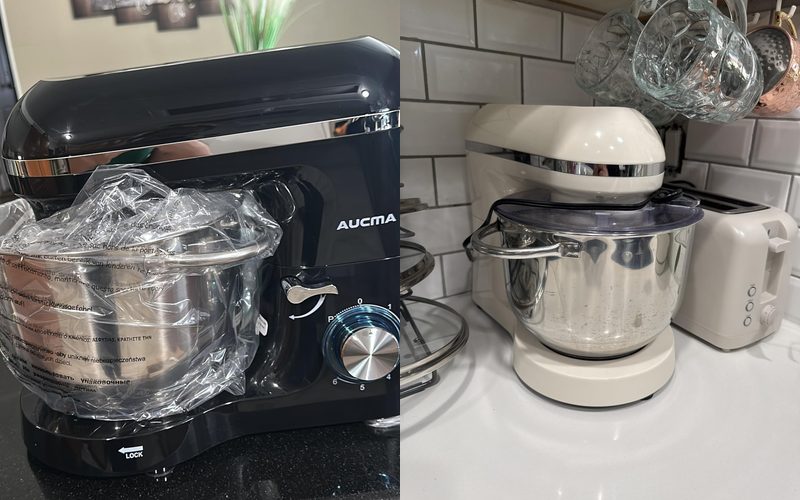
Key Features
660W Motor and Planetary Mixing
The Aucma uses a planetary mixing action. The beater spins on its own axis while also travelling around the bowl, the same principle KitchenAid uses. In practice, this means fewer dead zones and more even mixing than cheap “fixed beater” mixers.
The 660W rating sounds impressive next to KitchenAid’s 275–325W figures, but don’t read too much into it. Wattage measures power draw, not torque at the hook. A well-geared lower-wattage motor can outlast a higher-wattage one under heavy dough. As you’ll see below, the Aucma’s real-world dough performance matches its price more than its wattage.
6.5-Quart Stainless Steel Bowl
The bowl is generously sized for the price. It comfortably handles a double batch of cookie dough or a cake batter for a family-size layer cake. For bread, it’s large enough for one to two standard loaves of soft dough. The real limit on batch size is the motor, not the bowl.
The bowl twists off with one hand and locks securely in place, which beginners will appreciate.
Tilt-Head Design and Suction-Cup Feet
The tilt-head design makes it easy to add ingredients and swap attachments. Four suction-cup feet keep the mixer firmly planted on the counter, even at higher speeds. That’s a nice touch, because light mixers tend to “walk” when kneading.
The trade-off is that the head itself has noticeable bounce at high speeds, which independent testers also observed.
Included Attachments
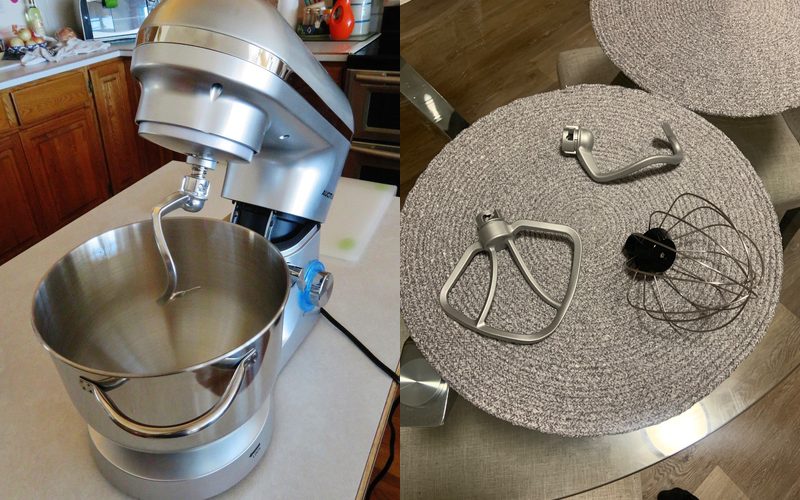
You get the three essentials, a flat beater, a spiral dough hook and a wire whisk, plus a splash guard. That covers 95% of home baking.
One thing to know: the Aucma 6.5-Qt has no attachment hub on the front. That means you can’t add a pasta roller, meat grinder, or other accessories the way you can with a KitchenAid. KitchenAid attachments are not compatible with it.
How Does the Aucma Handle Bread Dough?
This is the most important section for most of our readers, so let’s be direct.
Soft and High-Hydration Doughs: Good
For pizza dough, focaccia, soft dinner rolls, and enriched doughs like brioche, the Aucma performs well for its price. In TechGearLab’s testing, it handled a high-hydration focaccia dough surprisingly well. The spiral hook develops wet dough nicely, and the planetary action keeps it from just spinning in one spot.
Stiff Sandwich and Whole Wheat Doughs: It Struggles
Firmer doughs are a different story. During extended kneading of a stiff sandwich bread dough, TechGearLab reported that the motor stuttered and got warm, and the finished loaf came out lumpy. Some owners also report the mixer shaking and getting noisy with heavy bread dough.
There’s also a design limitation. The manufacturer recommends running each attachment for a maximum of about 3 minutes at a time. Most sandwich loaves need 6–10 minutes of mechanical kneading to develop full gluten. So you’ll either be running it past its recommended limit or kneading in short bursts.
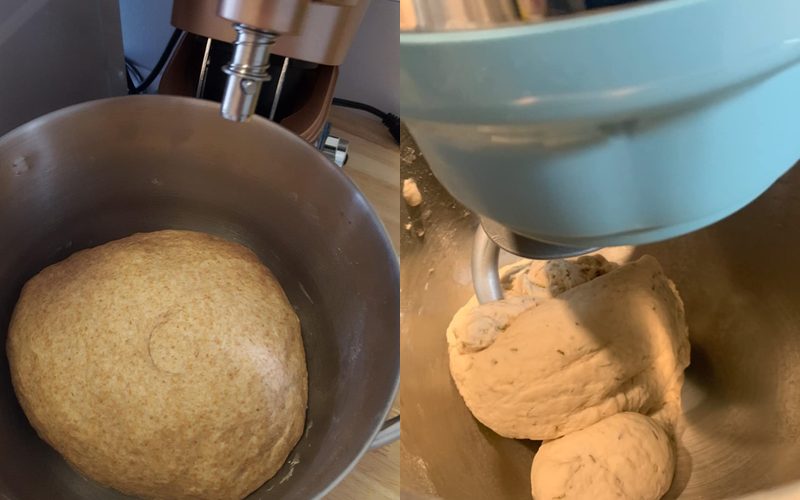
How to Knead Bread in the Aucma Without Burning It Out
If you buy it for bread, these habits will help a lot:
- Use speed 1–2 only for kneading. Higher speeds add heat and strain without kneading any better.
- Knead in intervals. Run 3 minutes, rest 2–3 minutes, then repeat. The dough also benefits from the rest.
- Try an autolyse. Mix flour and water and let it rest for 20–30 minutes before adding salt and yeast. Gluten starts developing on its own, so the mixer needs less kneading time.
- Make smaller batches of stiff dough. One loaf at a time, not two.
- For 100% whole wheat or bagel dough, consider finishing by hand.
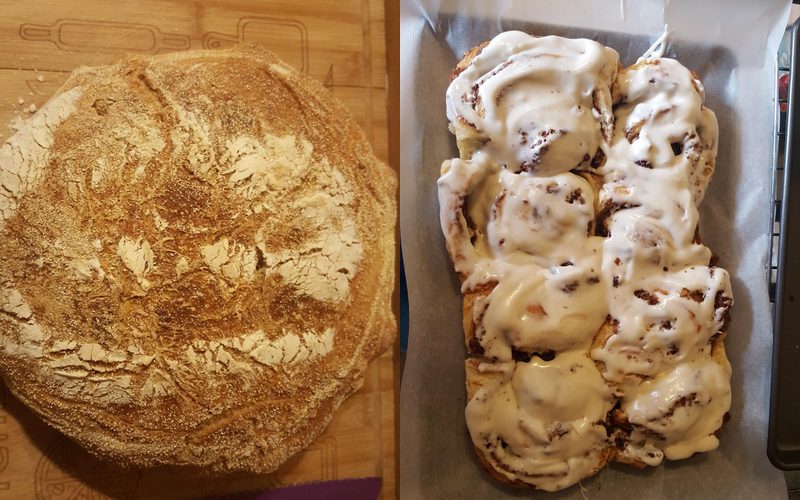
If bread is your main goal, a dedicated dough maker or bread machine may serve you better than a budget stand mixer. These machines are built specifically for long kneading cycles. See our guide to the best dough kneading machines, or our reviews of the Bear Dough Maker and DoughChief Dough Maker.
Whipping, Cookies and Cakes
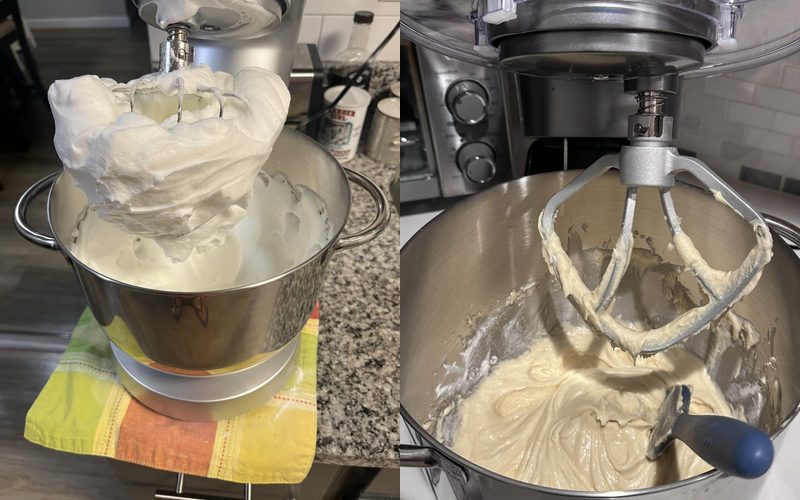
Whipping is the Aucma’s weakest area. In independent testing, one cup of heavy cream took about 3 minutes 30 seconds to reach stiff peaks. Very small volumes, like a single egg white, don’t whip well because the whisk doesn’t reach the bottom of the wide bowl closely enough. If you make meringues or macarons often, this will frustrate you.
Cookies and cake batters are where it shines. It beats butter and sugar well and handles chunky mix-ins like chocolate chips and nuts without trouble. Expect to stop and scrape down the bowl now and then. The splash guard also fits loosely, so add flour slowly on low speed.
What We Like (Pros)
- About one-third of the price of a KitchenAid, with a larger bowl
- Complete set of essential attachments included
- One-handed bowl removal, and the bowl locks in securely
- Strong suction-cup feet keep it stable on the counter
- Handles soft bread dough, pizza dough and cookie dough well
- Relatively light (about 10.5 lbs) and easy to store
- 12 color options to match your kitchen
What Could Be Better (Cons)
- Struggles with stiff dough during long kneading, and the motor can get warm
- The 3-minute run-time recommendation is short for bread
- Slow at whipping cream and egg whites
- Head bounces at high speeds
- Most parts aren’t dishwasher safe. Some owners report the coating on the beaters flaking.
- No attachment hub for pasta, grinding, etc.
- Warranty details are unclear. Check the listing before buying.
Aucma vs. The Competition
| Mixer | Approx. Price | Best For |
|---|---|---|
| Aucma 6.5-Qt | ~$130 | Beginners, soft doughs, cookies, tight budgets |
| Hamilton Beach 7-Speed | ~$145 | Buyers who want a familiar brand |
| Kitchen in the box 6.5-Qt | Check current price | Budget bakers who want 10 speeds and dual bowl handles |
| Kitchen in the box 3.2-Qt mini | ~$80 | Small kitchens, small batches, lowest price |
| Vospeed 8.5-Qt | ~$100 | Big batches, extra accessories included |
| KitchenAid Classic | ~$400 | Frequent bakers who want a mixer for decades |
Aucma vs. KitchenAid: In TechGearLab’s comparison, the KitchenAid Classic scored noticeably better overall (80 vs. 60), mainly because it whips faster and copes better with long kneading. It also has the attachment hub and a long track record for durability. The Aucma wins on price, bowl size and color choice. If you bake weekly, the KitchenAid is the better investment. If you bake occasionally, the Aucma saves you $250+.
Aucma vs. Hamilton Beach: In the same testing, the Aucma outscored the Hamilton Beach 7-Speed (60 vs. 52). The Aucma has a bigger bowl and handles dough better. The Hamilton Beach is more compact.
Aucma vs. Kitchen in the box: The brand’s 3.2-Qt mini is cheaper and smaller but scored lower (47) in the same testing, so it’s better suited to light mixing than bread. Its newer 6.5-Qt model is a much closer rival to the Aucma, with the same bowl size, 10 speeds and dual bowl handles, though it hasn’t been independently tested yet. See our Kitchen in the box 6.5-Qt stand mixer review.
See the Aucma’s current price and reviews on Amazon →
Aucma 6.5 Qt vs 7.4 Qt vs 8.5 Qt: Which Size Should You Get?
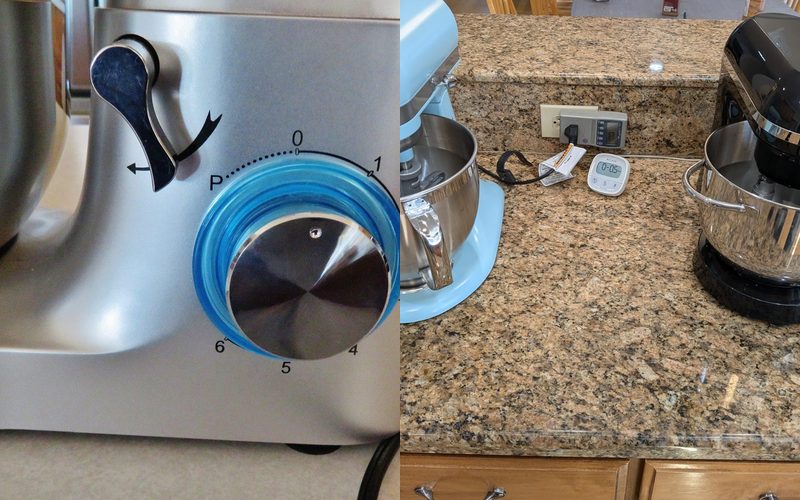
Aucma sells the mixer in several sizes:
| Model | Motor | Bowl | Good For |
|---|---|---|---|
| 6.5 Qt | 660W | 6.5 qt | Most households, everyday baking |
| 7.4 Qt | ~660W | 7.4 qt | Slightly larger batches |
| 8.5 Qt | 900W | 8.5 qt | Big families, double batches of dough |
For bread bakers, the 8.5-Qt 900W model is the one to look at, because the extra motor headroom matters more than the extra bowl space. Note that most independent testing so far has been on the 6.5-Qt, so check owner reviews for the larger models before buying.
Tips for Getting the Most Out of Your Aucma Stand Mixer
- Respect the run-time limit. Short rest breaks extend the motor’s life.
- Start every mix on low speed to avoid flour clouds, then increase gradually.
- Add dry ingredients in stages rather than all at once.
- Chill the bowl and whisk for 10 minutes before whipping cream. It speeds things up noticeably.
- Hand-wash the attachments with warm soapy water and dry them right away to protect the coating.
- Adjust the beater height if it’s scraping or missing the bottom of the bowl. Many tilt-head mixers have an adjustment screw, so check your manual.
Who Should (and Shouldn’t) Buy the Aucma Stand Mixer?
The Aucma is a good fit if you:
- Bake a few times a month
- Mostly make cookies, cakes, pizza dough or soft breads
- Want a full-size mixer for under $150
- Care about having a color that matches your kitchen
Look elsewhere if you:
- Bake dense sandwich, whole wheat or bagel dough every week
- Whip cream or make meringues often
- Want pasta-roller or grinder attachments
- Want a mixer that will last 15+ years
Frequently Asked Questions
Is Aucma a good brand?
Aucma is a Chinese home-appliance manufacturer best known for refrigerators and freezers. Its stand mixers are well regarded as budget mixers. TechGearLab named the 6.5-Qt its “Best Mixer on a Tight Budget.” It isn’t built to the same standard as a KitchenAid, but it offers good value for occasional bakers.
Can the Aucma stand mixer knead bread dough?
Yes, with limits. It handles soft, enriched and high-hydration doughs well. With stiff sandwich or whole wheat dough, the motor can strain and warm up during long kneading. Knead on low speed in 3-minute intervals with rests.
Does the Aucma stand mixer overheat?
It can get warm with stiff dough and long run times. Follow the manufacturer’s recommended run time of about 3 minutes per attachment and rest the motor between rounds. Many owners report no overheating with 5–6 minute dough sessions on low speed.
Are KitchenAid attachments compatible with the Aucma?
No. The Aucma 6.5-Qt has no front attachment hub, and KitchenAid bowls and beaters aren’t designed to fit it.
Is the Aucma bowl dishwasher safe?
Check the manual for your specific model. Most attachments should be hand-washed, and some owners report the beater coating flaking. Hand-washing and drying right away is the safest approach.
What’s the warranty on Aucma stand mixers?
Warranty terms vary by seller and listing. Check the Amazon product page or contact Aucma’s customer service before buying.
Which Aucma stand mixer is best for bread?
The 8.5-Qt 900W model has the most motor headroom for bread dough. The 6.5-Qt works fine for soft doughs and one-loaf batches.
Final Thoughts
The Aucma 6.5-Qt Stand Mixer delivers a lot for around $130. You get a big bowl, planetary mixing, a full set of attachments, a stable base and plenty of colors. For cookies, cakes, pizza dough and soft breads, it does the job well, and most occasional bakers will be happy with it.
It isn’t a bread workhorse, though. Stiff doughs push the motor, the recommended run time is short for proper gluten development, and whipping is slow. If you bake dense loaves every week, put the money toward a KitchenAid or a dedicated dough maker instead.
Our rating: 7/10 for occasional bakers, 5/10 for serious bread bakers.
Leave a Reply