
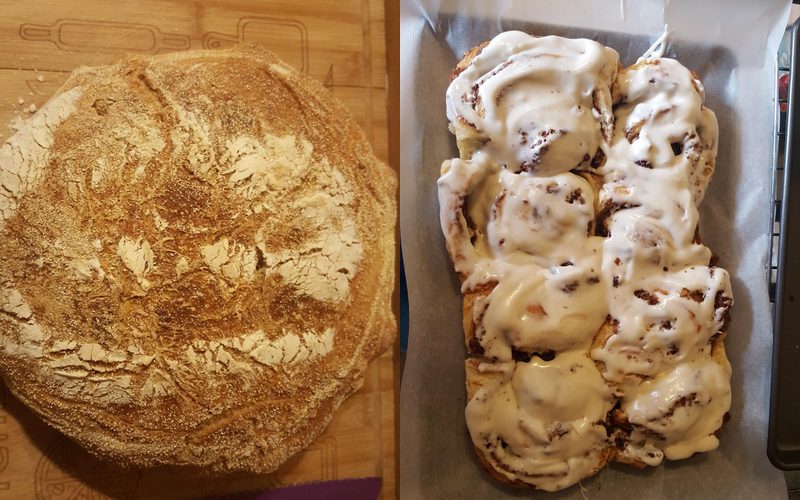
A bread machine is brilliant at mixing and kneading, but the loaves it bakes have a few quirks: a tall, boxy shape, a hole from the kneading paddle, and sometimes a thick or uneven crust. The easy solution is to let the machine do the hard work and finish the bread in your oven.
Using the dough cycle and baking in the oven gives you the best of both: hands-off kneading and a classic bakery-style loaf, rolls or pizza. In this guide, we explain how to do it step by step, which recipes work best, and the right oven temperatures and times.
Why Bake Bread Machine Dough in the Oven?
- No paddle hole in the bottom of the loaf
- Better shape: a classic sandwich loaf, a round boule, baguettes or rolls
- Better crust: more even browning, and you control how crisp it gets
- More variety: cinnamon rolls, dinner rolls, focaccia, pizza and braided breads
- Bigger batches than your bread machine can bake, if you divide the dough
What You Need
- A bread machine with a dough cycle (almost all have one)
- A bread machine recipe (any yeast bread recipe that fits your machine)
- A loaf pan (8.5 x 4.5 in for 1.5 lb dough, 9 x 5 in for 2 lb), a baking sheet, or a Dutch oven
- Parchment paper or butter for greasing
- A kitchen thermometer (optional but very helpful)
Step-by-Step: From Dough Cycle to Oven
1. Make the Dough on the Dough Cycle
Add the ingredients in your machine’s usual order and select the Dough cycle. This cycle mixes, kneads and gives the dough its first rise, usually in about 1.5 hours, then stops without baking.
Tip: check the dough ball 5 minutes into kneading. It should be smooth and slightly tacky. Adjust with a tablespoon of flour or a teaspoon of water if needed.
2. Remove and Degas the Dough
When the cycle ends, lightly flour your counter and turn the dough out. Press it gently with your hands to release large air bubbles. If the dough springs back too much to shape, cover it and let it rest for 10 minutes.
3. Shape the Dough
For a sandwich loaf: press the dough into a rectangle about as wide as your pan is long. Roll it up tightly from the short side, pinch the seam closed and place it seam-side down in a greased loaf pan.
For a round boule: fold the edges into the center, flip it over, and cup your hands around it, dragging it gently toward you on the counter to tighten the surface. Place it on parchment.
For rolls: divide the dough into 12–16 equal pieces (weigh them for even rolls), roll each into a tight ball and place them in a greased baking dish, slightly apart.
4. Second Rise (Proofing)
Cover the shaped dough with a clean towel or plastic wrap and let it rise in a warm spot until about doubled, usually 30–60 minutes. A loaf in a pan is ready when the dough has risen about 1 inch above the rim.
The poke test: press a floured finger about ½ inch into the dough. If the dent springs back slowly and leaves a slight mark, it’s ready. If it springs back instantly, wait longer. If it doesn’t spring back at all, it’s over-proofed, so bake it right away.
5. Preheat the Oven
Preheat while the dough is rising, so the oven is fully hot when the dough is ready.
6. Bake
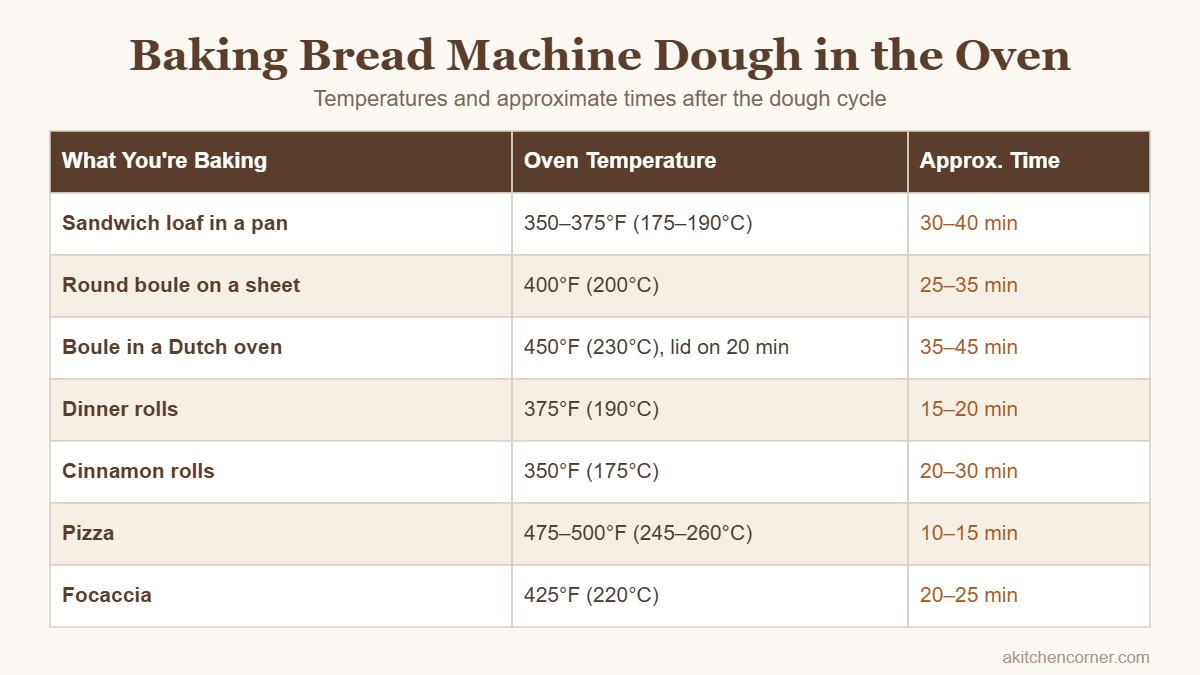
Use the table below as a guide. Bake until the crust is golden and the bread sounds hollow when tapped on the bottom. The most reliable test is temperature: 190–200°F (88–93°C) in the center for lean bread, and about 190°F (88°C) for enriched breads with butter, milk or eggs.
7. Cool
Remove the bread from the pan right away and cool it on a wire rack for at least 1 hour before slicing (rolls about 20 minutes).
Oven Temperatures and Times
| What You’re Baking | Oven Temperature | Approximate Time |
|---|---|---|
| Sandwich loaf in a pan (1.5–2 lb dough) | 350–375°F (175–190°C) | 30–40 minutes |
| Round boule on a sheet | 400°F (200°C) | 25–35 minutes |
| Boule in a Dutch oven | 450°F (230°C), lid on 20 min, then off | 35–45 minutes total |
| Dinner rolls | 375°F (190°C) | 15–20 minutes |
| Cinnamon rolls | 350°F (175°C) | 20–30 minutes |
| Pizza | 475–500°F (245–260°C) | 10–15 minutes |
| Focaccia | 425°F (220°C) | 20–25 minutes |
Ovens vary, so start checking 5 minutes before the shortest time. If the top browns too quickly, tent it loosely with foil.
Converting a Regular Bread Machine Recipe
Any standard bread machine yeast recipe can go in the oven. A few things to know:
- Use the same ingredients. You don’t need to change the recipe.
- Sweet and enriched doughs (brioche, challah, cinnamon rolls) bake at lower temperatures, around 325–350°F, because sugar and butter brown quickly.
- Whole wheat dough may need a slightly longer second rise.
- Quick breads made with baking powder (banana bread, cornbread) don’t use the dough cycle. Mix them and bake straight away.
Need a reliable dough to start with? Our soft bread machine white bread recipe works perfectly on the dough cycle and bakes into a classic sandwich loaf.
Tips for Better Oven-Baked Bread
- For a shiny crust, brush with beaten egg before baking.
- For a soft crust, brush the hot loaf with melted butter.
- For a crisp crust, put a pan of hot water on the bottom rack for the first 10 minutes.
- Slash the top of a boule with a sharp knife or razor just before baking so it rises evenly.
- Make it ahead: after shaping, cover the dough and refrigerate it overnight. Let it finish rising at room temperature for 1–2 hours the next day, then bake.
- Freeze extra dough: freeze shaped rolls or dough balls after the dough cycle. See our guide on how to freeze homemade bread for wrapping tips.
Common Problems
| Problem | Cause | Fix |
|---|---|---|
| Loaf spread flat | Dough too wet or shaped loosely | Shape tighter, use a pan, reduce water slightly |
| Big cracks on the side | Under-proofed | Let it rise longer, slash the top |
| Collapsed in the oven | Over-proofed | Bake sooner, use the poke test |
| Pale crust | Oven too cool | Check with an oven thermometer |
| Gummy center | Underbaked or sliced hot | Bake to 190–200°F inside, cool 1 hour |
For bread machine loaves that go wrong, see our full bread machine troubleshooting guide.
Frequently Asked Questions
Can you bake bread machine dough in a regular oven?
Yes. Use the dough cycle, shape the dough, let it rise until about doubled, then bake. A 1.5–2 lb sandwich loaf usually takes 30–40 minutes at 350–375°F.
How long should bread machine dough rise before baking in the oven?
After shaping, usually 30–60 minutes in a warm spot, until about doubled. Use the poke test: the dent should spring back slowly.
What temperature do you bake bread machine dough at?
Most loaves bake at 350–375°F (175–190°C). Rolls bake at about 375°F, and pizza at 475–500°F. Bake until the center reaches 190–200°F.
Do I need to let the dough rise again after the dough cycle?
Yes. The dough cycle includes the first rise. After you shape the dough, it needs a second rise before baking.
Can I refrigerate bread machine dough overnight?
Yes. Shape it, cover it well and refrigerate it for up to 24 hours. Let it come to room temperature and finish rising for 1–2 hours before baking.
Can I use any bread machine recipe on the dough cycle?
Any yeast bread recipe works. Quick breads made with baking powder or baking soda don’t need the dough cycle.
Final Thoughts
The dough cycle is one of the most underused features on a bread machine. Let the machine knead and rise the dough, then spend 10 minutes shaping it and let your oven do the rest. You’ll get a better-looking loaf with no paddle hole, and you’ll open up a whole range of rolls, pizzas and sweet breads your machine can’t bake on its own.
Leave a Reply