
Bread machines make baking easy, but even good machines turn out a disappointing loaf now and then. The top caves in, the loaf comes out short and heavy, the crust is pale, or there’s a pocket of dry flour in the corner. The good news is that nearly every bread machine problem has a short list of causes, and most of them are fixed by small changes to the recipe or the way you load the pan.
This bread machine troubleshooting guide covers the 20 most common problems in one place. Start with the quick lookup table, then jump to the section that matches your loaf. For the two most common problems, we have detailed guides: why bread machine bread collapses and why bread machine bread is dense.
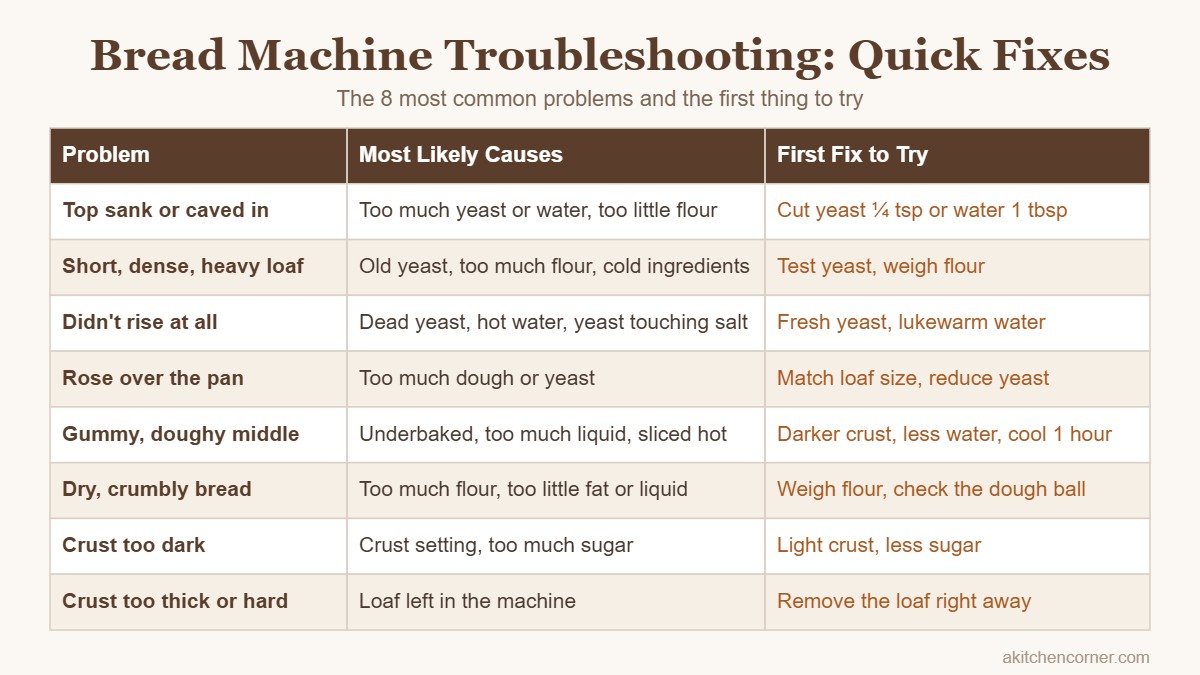
Quick Lookup Table
| Problem | Most Likely Causes | First Fix to Try |
|---|---|---|
| Top sank or caved in | Too much yeast or water, too little flour | Cut yeast by ¼ tsp or water by 1 tbsp |
| Short, dense, heavy loaf | Old yeast, too much flour, cold ingredients | Test yeast, weigh flour |
| Didn’t rise at all | Dead yeast, hot water, yeast touching salt | Fresh yeast, lukewarm water |
| Rose over the top of the pan | Too much dough, too much yeast | Match loaf size, reduce yeast |
| Mushroom top | Too much dough or yeast | Smaller recipe or less yeast |
| Gummy or doughy middle | Underbaked, too much liquid, sliced hot | Darker crust, less water, cool 1 hour |
| Dry, crumbly bread | Too much flour, too little fat or liquid | Weigh flour, check dough ball |
| Coarse crumb, big holes | Too much liquid or yeast | Reduce water slightly |
| Crust too dark | Crust setting, too much sugar | Light crust, less sugar |
| Crust too pale | Light setting, too little sugar | Darker crust, brush with butter |
| Crust too thick or hard | Left in machine, long cycle | Remove loaf right away |
| Soft, wrinkled, damp crust | Left in the pan to cool | Remove loaf right away |
| Flour pocket in corners | Dough too dry, short first knead | Add water, scrape corners |
| Lumpy, uneven top | Dough too dry | Add water 1 tsp at a time |
| Big hole in the bottom | Kneading paddle | Remove paddle before final rise (if possible) |
| Paddle stuck in the loaf | Normal with many machines | Remove when cool, grease paddle |
| Loaf sticks to the pan | Worn coating, sugar or cheese | Cool 5–10 min, loosen sides |
| Add-ins crushed or not mixed | Added at the wrong time | Use the add-in beep or dispenser |
| Machine noisy or “walking” | Stiff dough, uneven surface | Check dough, level counter |
| Error code or won’t start | Machine too hot, pan not seated | Let it cool, reseat pan, check manual |
Rise Problems
1. The Loaf Collapsed or Sank in the Middle
The dough rose higher than its gluten could support, then deflated before the crust set. The usual causes are too much yeast, too much water, too little flour (often from measuring by volume), too much sugar or too little salt, or a warm kitchen.
Fix: reduce the yeast by ¼ teaspoon or the water by 1 tablespoon, and weigh your flour. Full details in our guide to why bread machine bread collapses.
2. Short, Dense or Heavy Loaf
The dough didn’t rise enough. The most common causes are old yeast, too much flour, not enough liquid, cold ingredients, heavy whole grain flours or the rapid cycle.
Fix: test your yeast, weigh the flour, use lukewarm water and the basic cycle. Full details in our guide to why bread machine bread is dense.
3. The Bread Didn’t Rise at All
This almost always means the yeast wasn’t working. It may be expired, it may have been killed by water hotter than about 130°F, or it may have touched the salt or liquid too early during a delay-timer bake.
Fix: test the yeast in warm water with a pinch of sugar (it should foam within 10 minutes), use water around 75–80°F, and put the yeast in a small well on top of the flour, away from the salt.
4. The Dough Rose Over the Top of the Pan
There’s too much dough for the pan, or it’s rising too fast.
Fix: make sure the loaf size setting matches your recipe, reduce the yeast by ¼ teaspoon, and use cooler water on hot days.
5. Mushroom-Shaped Top
The dough rose above the pan and spread out before the crust set. It’s the same cause as over-rising, just less extreme.
Fix: reduce the yeast slightly or scale the recipe down to the next loaf size.
Texture Problems
6. Gummy or Doughy Middle
The loaf may be underbaked, the dough may have been too wet, or the bread was sliced while still hot.
Fix: reduce the water by 1 tablespoon, try a medium or dark crust setting for large loaves, remove the loaf from the pan right away, and let it cool for at least 1 hour before slicing.
7. Dry, Crumbly Bread
Usually too much flour or not enough fat or liquid. Whole grain and gluten-free loaves are naturally more crumbly.
Fix: weigh your flour, check the dough ball during kneading, and make sure you included the butter or oil. Adding 1–2 tablespoons of dry milk also softens the crumb. For gluten-free baking, see our guide to the best gluten-free bread machine.
8. Coarse Crumb With Big Holes
A very open crumb usually means the dough was too wet or over-proofed.
Fix: reduce the water by 1 tablespoon or the yeast by ¼ teaspoon.
Crust Problems
9. Crust Too Dark
The crust setting may be too high, or the recipe has a lot of sugar, honey, milk or eggs, which all brown faster.
Fix: choose the light crust setting, especially for sweet and enriched breads, or use the sweet bread cycle if your machine has one.
10. Crust Too Pale
The crust setting may be too low, or the recipe has very little sugar or fat.
Fix: use a medium or dark crust setting, add 1–2 tablespoons of dry milk or a little more sugar, or brush the hot loaf with butter.
11. Crust Too Thick or Hard
Thick crusts often come from leaving the loaf in the machine after baking, from long cycles like French bread, or from very lean dough with no fat.
Fix: remove the loaf as soon as the cycle ends, choose a lighter crust, add a tablespoon of butter or oil to the recipe, and store the cooled loaf in a bag to soften the crust.
12. Soft, Wrinkled or Damp Crust
Steam condenses on the crust if the loaf cools inside the pan or machine.
Fix: take the loaf out of the pan right away and cool it on a wire rack.
Mixing and Shape Problems
13. Pockets of Dry Flour in the Corners
The dough was too dry, or the paddle couldn’t reach the corners in the first knead.
Fix: check the dough 5 minutes into kneading. If there’s flour in the corners, scrape it into the dough with a silicone spatula, and add water 1 teaspoon at a time if the dough looks stiff.
14. Lumpy, Knobby or Uneven Top
The dough was too stiff to smooth out during the final rise.
Fix: add water 1 teaspoon at a time during kneading until the dough ball is smooth and slightly tacky.
15. Big Hole in the Bottom of the Loaf
This is caused by the kneading paddle, and almost every bread machine loaf has one.
Fix: some cooks remove the paddle after the last knead (check your manual for when that happens) and reshape the dough. Others use the dough cycle and bake the loaf in the oven. A machine with a collapsible paddle makes a smaller hole.
16. Paddle Stuck in the Loaf
Also very common, especially with sticky doughs.
Fix: let the loaf cool slightly, then remove the paddle with the hook that came with your machine or a wooden spoon handle. Lightly greasing the paddle before adding ingredients can help.
17. Loaf Sticks to the Pan
Sugar, cheese and fruit can caramelize and stick, and older pans lose their non-stick coating.
Fix: let the pan sit for 5–10 minutes after baking, then turn it upside down and shake gently. Run a silicone spatula around the edges if needed. Never use metal tools on the coating.
18. Add-Ins Crushed or Not Mixed In
Nuts, raisins or chocolate were added too early or too late.
Fix: add them at the add-in beep, or use the automatic fruit and nut dispenser if your machine has one. Toss sticky fruit in a little flour first.
Machine Problems
19. Machine Is Loud or Moves on the Counter
Some noise and vibration during kneading is normal. Very stiff dough makes it much worse.
Fix: check that the dough isn’t too dry, place the machine on a flat, stable surface away from the edge, and make sure the pan is locked in place.
20. Error Code, Won’t Start or Stops Mid-Cycle
Many machines won’t start if they’re still hot from a previous bake, if the pan isn’t seated correctly, or after a power interruption.
Fix: let the machine cool with the lid open for 15–30 minutes, reseat the pan until it clicks, and look up the error code in your manual. Some machines have a short power-failure memory and will continue after a brief outage; others restart from the beginning.
The 6 Habits That Prevent Most Problems
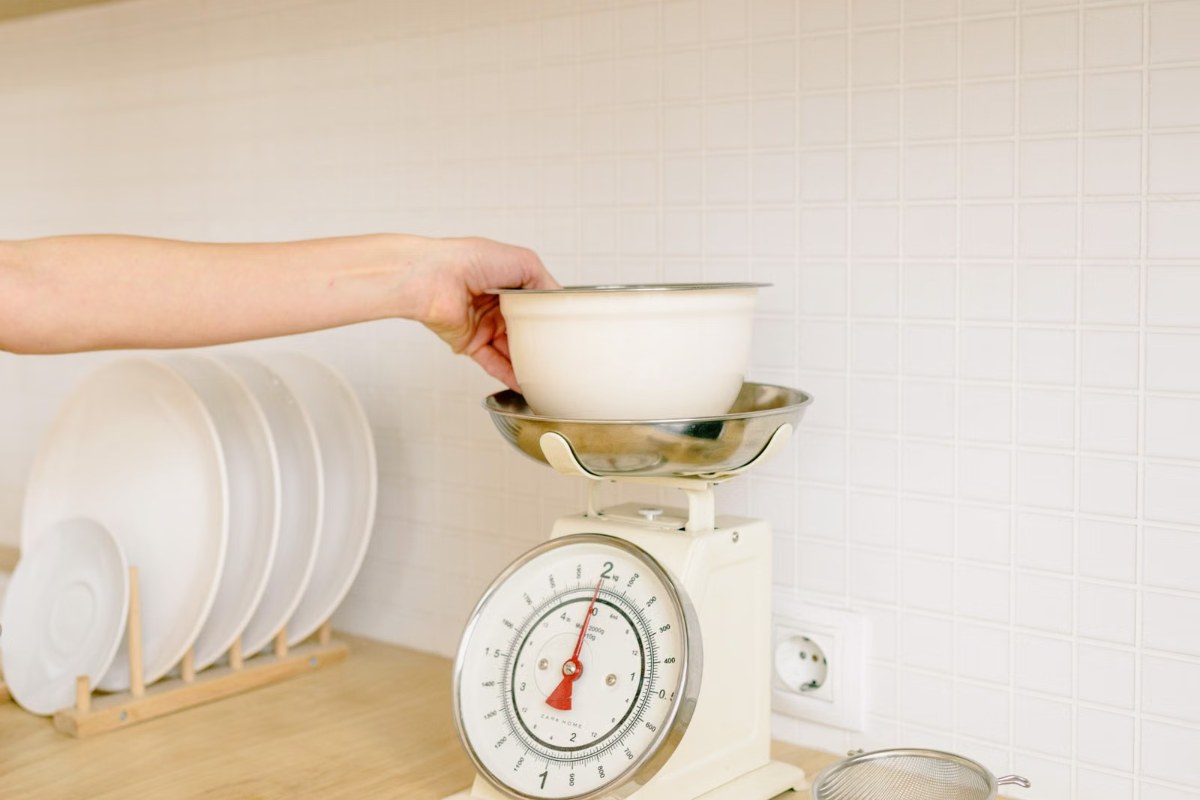
- Weigh your flour instead of using cups.
- Use fresh yeast stored in the fridge or freezer.
- Use lukewarm water (75–80°F) and room-temperature ingredients.
- Load ingredients in your manual’s order, with yeast kept away from salt and liquid.
- Check the dough ball 5 minutes into kneading and adjust with flour or water.
- Remove the loaf right away and cool it for an hour before slicing.
New to bread machines? Our bread machine tips for beginners explains each habit in more detail, and our soft bread machine white bread recipe is a reliable loaf to practice with.
When Is It the Machine, Not the Recipe?
Most problems come from ingredients and measuring. But if you’ve ruled those out and your loaves are still consistently pale, underbaked or unevenly baked, the machine may be the issue:
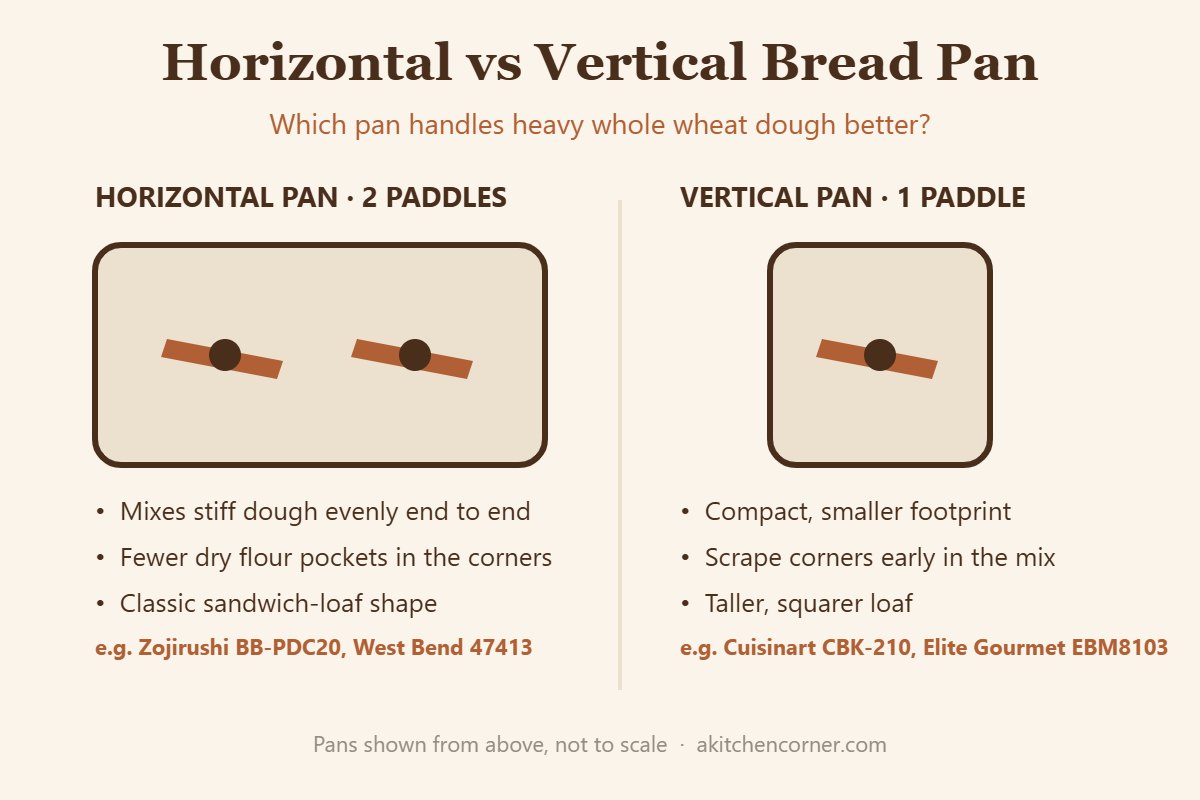
- Heating element weakening in an older machine
- Worn paddle shaft or seal, causing leaks or poor kneading
- Damaged non-stick coating, causing sticking
If your machine is old or worn out, our guides to the best bread machines under $100 and the best bread machine for whole wheat bread can help you choose a replacement.
Frequently Asked Questions
What is the most common bread machine problem?
A loaf that collapses or sinks in the middle, followed closely by dense, short loaves. Both are usually caused by measuring, especially flour measured by volume, and by the amount of yeast or water.
Why does my bread machine bread come out different every time?
Usually because flour is measured by volume, which varies from scoop to scoop, or because room temperature and humidity change. Weigh your flour and check the dough ball during kneading to adjust for the day.
How do I know if my yeast is still good?
Stir 1 teaspoon of yeast and 1 teaspoon of sugar into ¼ cup of warm water (about 105–110°F). If it doesn’t foam within 10 minutes, replace it.
Why is there a hole in the bottom of my bread machine bread?
It’s left by the kneading paddle. It’s normal for most machines. You can remove the paddle after the last knead and reshape the dough, or bake the dough in the oven instead.
Why is my bread machine crust so hard?
Usually because the loaf was left in the machine after baking, the crust setting was too dark, or the dough had no fat. Remove the loaf right away, use a lighter setting and add a little butter or oil.
Should I adjust bread machine recipes for high altitude?
Yes. At high altitude, dough rises faster. Reduce the yeast by about a quarter, add a little more liquid if the dough seems dry, and consider a slightly smaller loaf size.
Final Thoughts
Bread machine problems look different on the outside, but most come down to the same few things: how you measure, how fresh your yeast is, how warm your ingredients are, and when you take the loaf out. Use the lookup table, change one thing at a time, and keep notes. Within a few bakes, you’ll know exactly how your machine likes its dough.
Leave a Reply