
You open the lid expecting a tall, domed loaf and find a crater instead. The top has sunk in the middle, or the whole loaf has caved in on one side. It’s one of the most common bread machine problems, and it’s frustrating because the loaf usually rose beautifully at first.
The good news: a collapsed loaf almost always has a simple cause, and it’s usually fixable with a small change to the recipe. In this guide, we explain why bread machine bread collapses, how to tell which cause applies to your loaf, and exactly what to change next time.
Why Bread Collapses: The Short Version
A loaf collapses when the dough rises higher than its gluten structure can support, then deflates before the crust sets in the oven phase. Think of it as a balloon that was blown up too far. The fix is always one of two things:
- Slow the rise down (less yeast, less sugar, cooler water, more salt), or
- Make the structure stronger (less water, stronger flour, more gluten)
Here are the specific causes, roughly in order of how often they’re to blame.
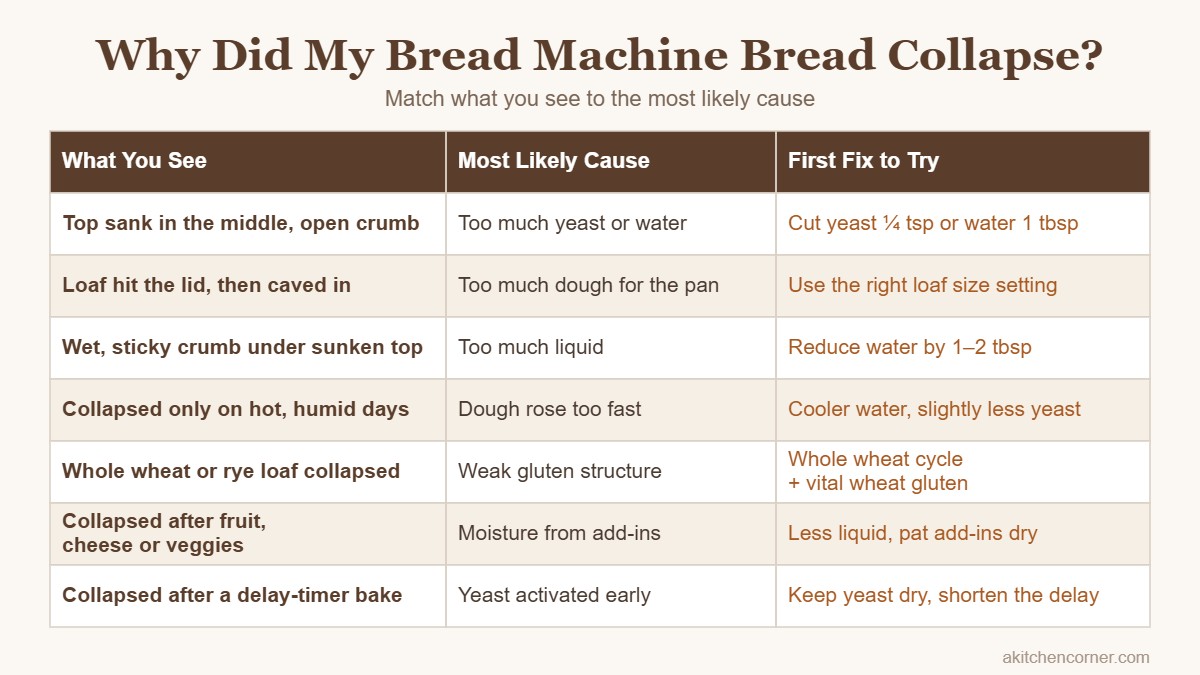
Quick Diagnosis Table
| What You See | Most Likely Cause | First Thing to Try |
|---|---|---|
| Top sank in the middle, coarse open crumb | Too much yeast or too much water | Cut yeast by 1/4 tsp, or water by 1 tbsp |
| Loaf hit the lid, then caved in | Too much dough for the pan size | Use the right loaf size setting or a smaller recipe |
| Wet, sticky crumb under the sunken top | Too much liquid | Reduce water by 1–2 tbsp |
| Collapsed only on hot, humid days | Rise too fast | Use cooler water, slightly less yeast |
| Collapsed on a whole wheat or rye loaf | Weak gluten structure | Use the whole wheat cycle, add vital wheat gluten |
| Collapsed after adding fruit, cheese or veggies | Extra moisture from add-ins | Reduce liquid, pat add-ins dry |
| Collapsed after a delay-timer bake | Yeast activated early or dough over-proofed | Keep yeast away from liquid, shorten delay |
1. Too Much Yeast
This is the most common cause. More yeast doesn’t make a better loaf. It makes the dough rise too fast and too high, and then it runs out of strength.
Signs: a big rise early on, a sunken top, and a coarse, open crumb with large holes.
Fix: measure yeast with proper measuring spoons and level them off. If your loaf keeps collapsing, reduce the yeast by 1/4 teaspoon and try again. Also check the type of yeast. Recipes written for active dry yeast need adjusting if you use instant or bread machine yeast, which is stronger.
2. Too Much Water or Liquid
Wet dough rises quickly but has a weak structure, so it can’t hold its shape once it’s tall.
Signs: a sunken top with a damp or gummy layer just underneath.
Fix: reduce the water by 1–2 tablespoons. Better still, check the dough about 5 minutes into kneading. It should form a smooth, soft ball that cleans the sides of the pan. If it’s sticking to the sides like batter, add flour 1 tablespoon at a time.
3. Measuring Flour by Volume
Scooping flour straight from the bag packs it in, but spooning it in lightly can give you much less. The difference between two “cups” of flour can be large enough to throw off your water ratio, and too little flour has the same effect as too much water.
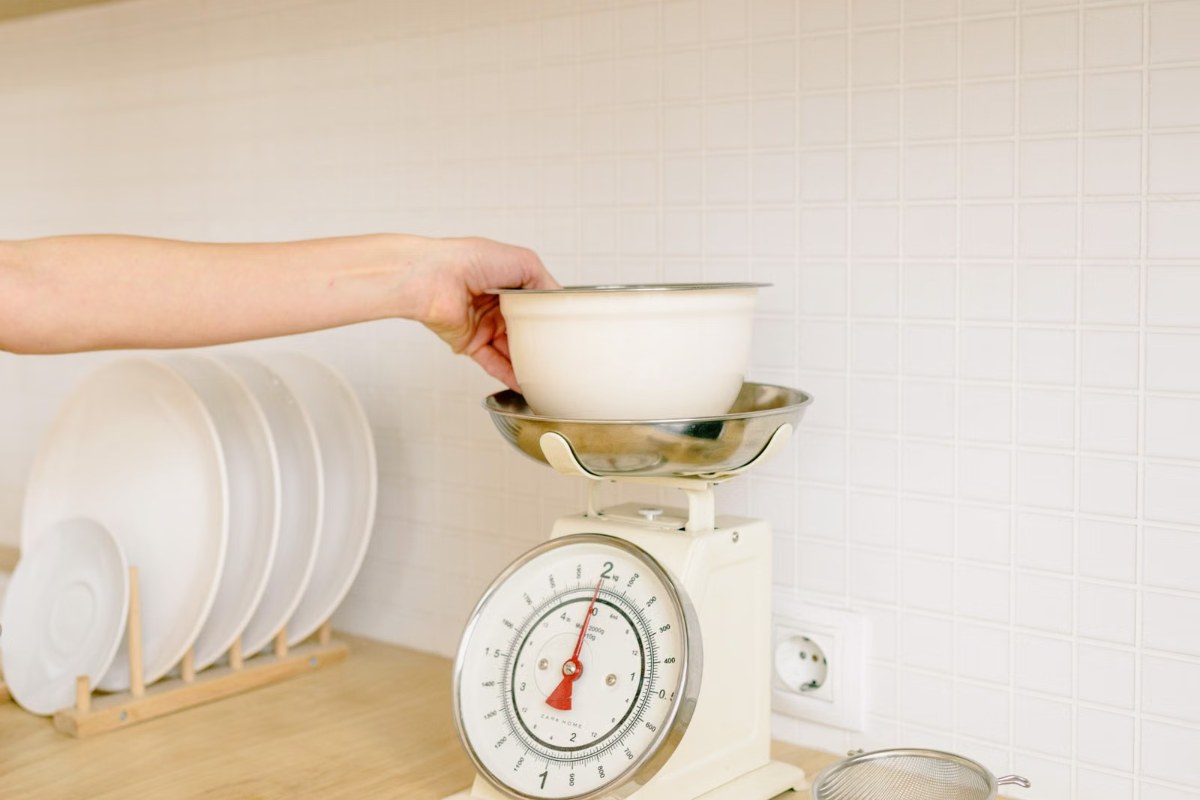
Fix: weigh your flour. A digital kitchen scale is the single best upgrade for bread machine baking. If you don’t have one, spoon flour into the cup and level it with a knife rather than scooping.
4. Too Much Sugar (or Not Enough Salt)
Sugar feeds yeast. Salt controls it. Too much sugar or too little salt both lead to a rise that’s too fast.
Fix: follow the recipe’s sugar and salt amounts exactly. Never leave out the salt to make a “healthier” loaf, because it’s what keeps the yeast in check. If you reduce salt, reduce yeast slightly too.
5. Too Much Dough for the Pan
If the recipe makes more dough than your pan is designed for, the loaf rises up to the lid, gets squashed or loses support, and collapses.
Signs: the top hit the viewing window or lid, then sank.
Fix: make sure the loaf size setting (1 lb, 1.5 lb, 2 lb) matches your recipe and your machine’s capacity. If you’re unsure, scale the recipe down.
6. Warm Kitchen or Warm Ingredients
Yeast works faster in warmth. On a hot day, or with water that’s too warm, the dough can over-rise before the bake cycle starts.
Fix: use water at about 75–80°F (24–27°C) for most bread machines, or cool tap water on hot days. If your kitchen is very warm, cut the yeast by 1/4 teaspoon.
7. Weak Flour or Heavy Flours
All-purpose flour has less gluten-forming protein than bread flour. Whole wheat, rye and other whole grain flours add weight and cut through gluten. Both can leave the dough too weak to hold a tall rise.
Fix: use bread flour for white loaves. For whole grain loaves, use your machine’s whole wheat cycle, which has a longer knead and rise, and consider adding 1 tablespoon of vital wheat gluten per cup of whole grain flour. Our guide to the best flour for bread machine bread explains which flours work best.
8. Wet Add-Ins
Fruit, cheese, onions, olives, zucchini and other add-ins release moisture during baking. That extra water weakens the dough.
Fix: pat add-ins dry, reduce the recipe’s liquid by 1–2 tablespoons, and add them at the machine’s add-in beep rather than at the start.
9. Delay Timer Problems
If you use the delay timer, the yeast must stay dry and separate from the liquid until the cycle starts. If it gets wet early, it starts working too soon, and the dough over-proofs.
Fix: add ingredients in the order your manual says, usually liquids first, then flour, with the yeast in a small well on top of the flour. Keep salt and sugar away from the yeast. Avoid using the delay timer with milk, eggs or other perishable ingredients.
Also Check: The Cycle and the Lid
- Using the rapid cycle with a recipe written for the basic cycle can make the rise unpredictable. Stick to the cycle the recipe was designed for.
- Opening the lid during the final rise or early baking can cause the dough to deflate. Peek through the window instead.
- Machine age: if the heating element is weak, the crust may set too slowly. If nothing else explains repeated collapse, compare the bake temperature with the manual or test with a different recipe.
Your Next-Loaf Checklist
- Weigh the flour.
- Measure yeast carefully, and reduce it by 1/4 tsp if your last loaf collapsed.
- Check the dough ball 5 minutes into kneading and adjust with flour or water.
- Use cool to lukewarm water, not hot.
- Make sure the loaf size setting matches the recipe.
- Don’t open the lid during rising or baking.
- Change one thing at a time, so you know what fixed it.
If your loaf has the opposite problem (short, heavy and tight), read our guide to why bread machine bread is dense.
Frequently Asked Questions
Why did my bread machine bread sink in the middle?
Usually the dough rose too fast and too high, then lost its structure before the crust set. The most common causes are too much yeast, too much water, or too little flour. Reduce the yeast by 1/4 teaspoon or the water by 1–2 tablespoons and try again.
Is collapsed bread machine bread safe to eat?
Yes. A collapsed loaf is safe as long as it’s fully baked. If the crumb under the sunken top is gummy, toast the slices or use them for breadcrumbs or bread pudding.
Can too much yeast make bread collapse?
Yes. It’s the most common cause. Extra yeast makes the dough rise faster and higher than the gluten can support, so it deflates before the crust sets.
Why does my bread collapse on hot days?
Warmth speeds up yeast. On hot or humid days, use cooler water and reduce the yeast slightly so the dough doesn’t over-rise.
Why did my whole wheat bread collapse in the bread machine?
Whole wheat flour forms weaker gluten. Use the whole wheat cycle, don’t overload the pan, and add about 1 tablespoon of vital wheat gluten per cup of whole wheat flour.
Does opening the bread machine lid cause collapse?
It can. Opening the lid during the final rise or early baking lets heat escape and can deflate the dough. Use the viewing window instead.
Final Thoughts
A collapsed loaf isn’t a failure. It’s a clue. In most cases, the dough simply rose more than it could hold, and a small change (a little less yeast, a little less water, or weighed flour) fixes it. Change one thing at a time, keep notes, and your next loaf should rise and stay tall.
Leave a Reply