
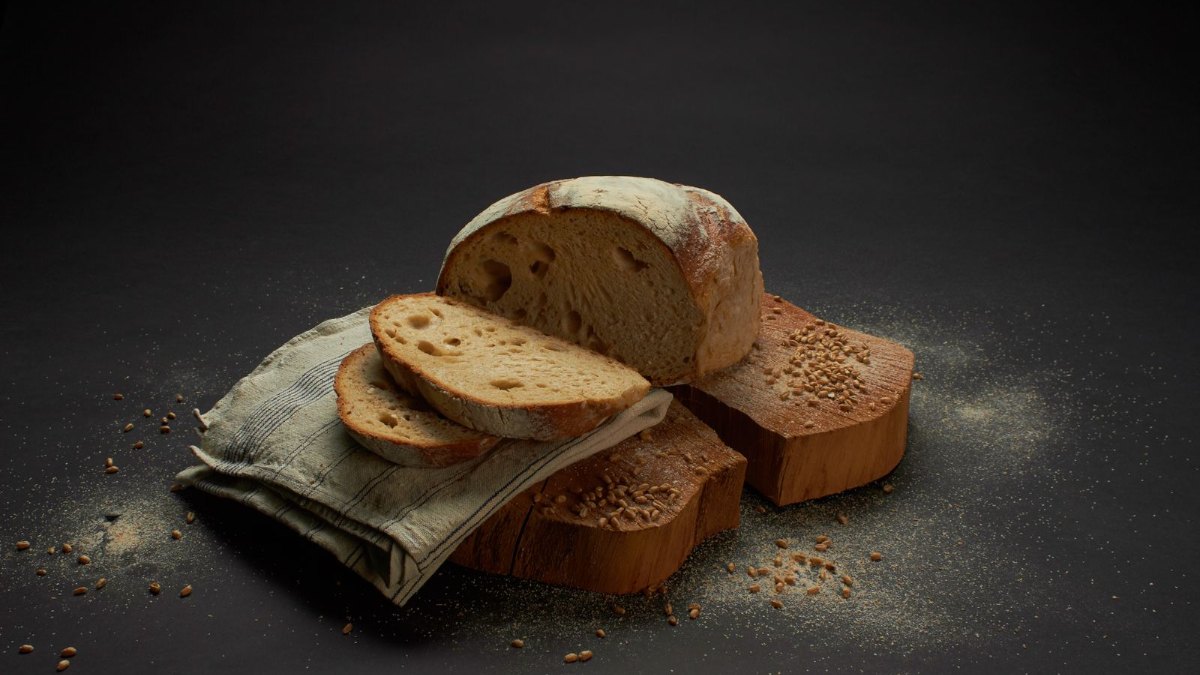
A bread machine should make soft, airy bread with almost no effort. So it’s disappointing when the loaf comes out short, heavy and tight, more like a brick than a sandwich loaf. Dense bread is one of the most common bread machine complaints, and it can show up as a short loaf, a gummy or doughy middle, or a crumb so tight it barely has holes.
Dense bread almost always means the dough didn’t rise enough, either because the yeast didn’t do its job or because the dough was too stiff or heavy to expand. In this guide, we walk through the 10 most common causes and how to fix each one.
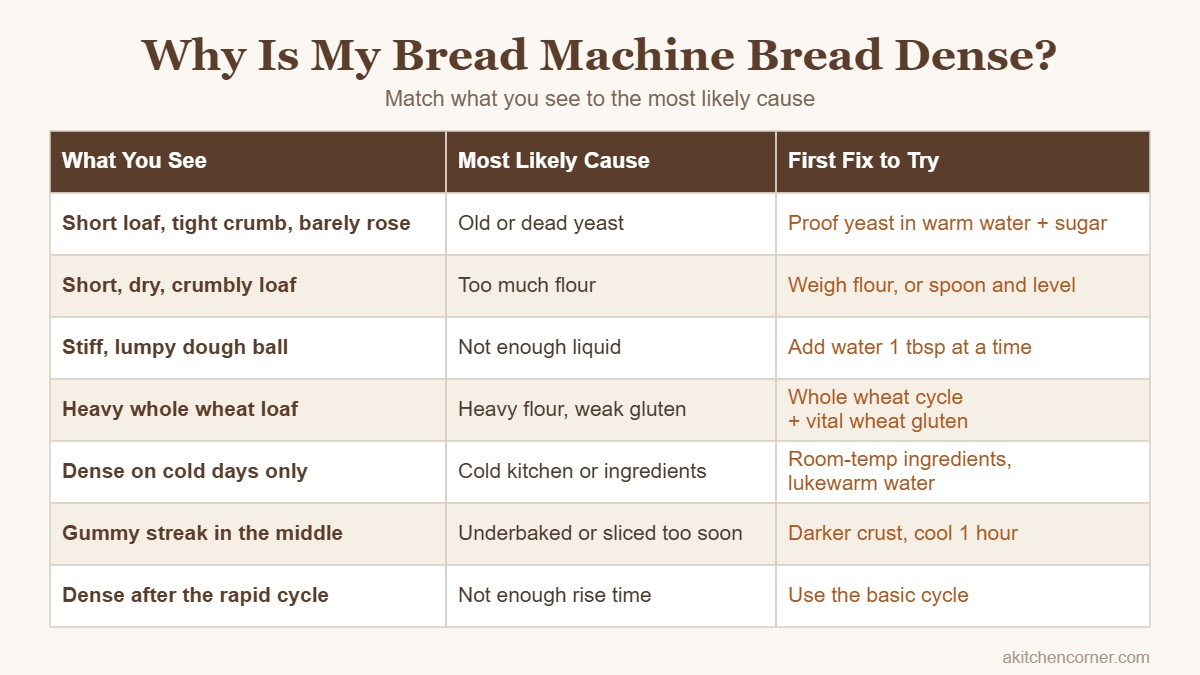
Quick Diagnosis Table
| What You See | Most Likely Cause | First Thing to Try |
|---|---|---|
| Short loaf, tight crumb, barely rose | Old or dead yeast | Test yeast in warm water with sugar |
| Short, dry, crumbly loaf | Too much flour | Weigh flour, or spoon and level |
| Dough ball stiff and lumpy during kneading | Not enough liquid | Add water 1 tbsp at a time |
| Heavy whole wheat loaf | Heavy flour, weak gluten | Whole wheat cycle, vital wheat gluten |
| Dense on cold days only | Cold kitchen or cold ingredients | Room-temperature ingredients, lukewarm water |
| Gummy streak in the middle | Underbaked or sliced too soon | Darker crust setting, cool 1 hour before slicing |
| Dense after using rapid cycle | Not enough rise time | Use the basic cycle |
1. Old or Inactive Yeast
Yeast is alive, and it loses strength over time, especially once the package is open. Expired or badly stored yeast is the number one cause of dense bread.
Test it: stir 1 teaspoon of yeast and 1 teaspoon of sugar into 1/4 cup of warm water (about 105–110°F). If it isn’t foamy within 10 minutes, replace it.
Fix: store opened yeast in an airtight container in the fridge or freezer, and check the date.
2. Too Much Flour
Scooping flour straight from the bag can add a surprising amount of extra flour. That makes stiff dough that can’t expand properly.
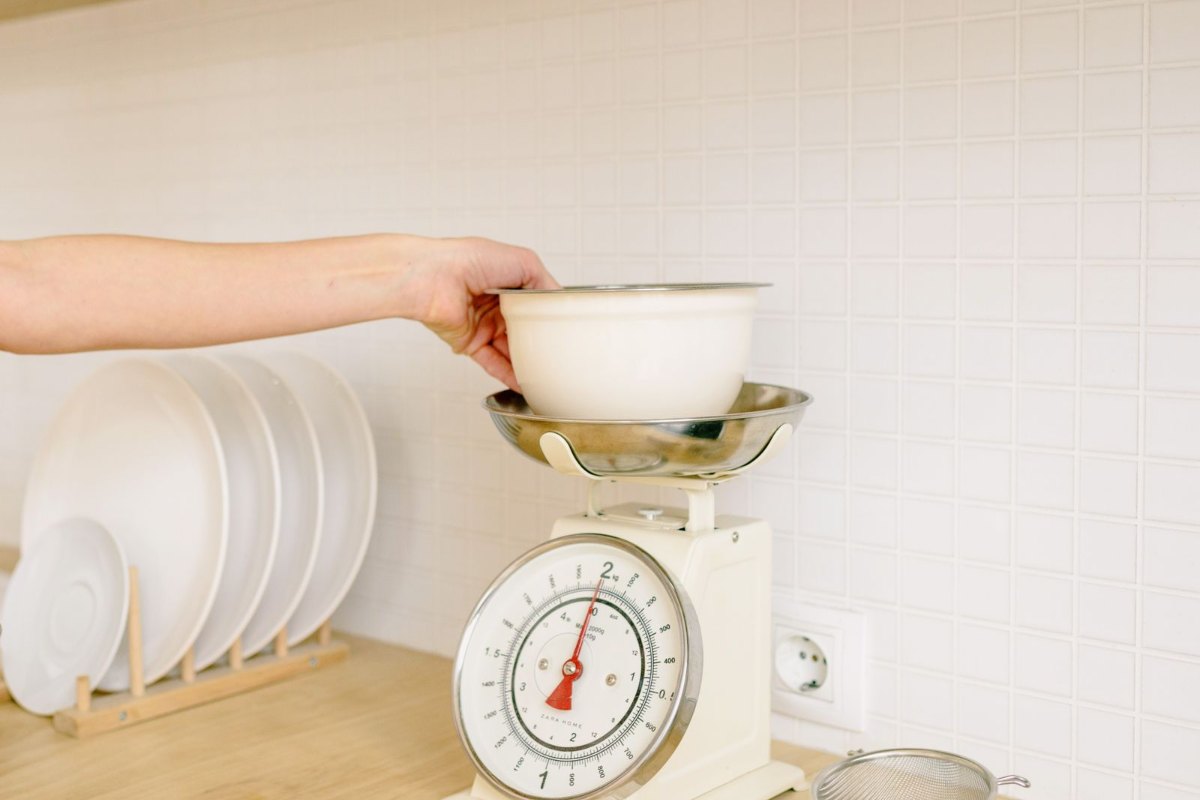
Fix: weigh your flour (a cup of bread flour is roughly 120–130 g, depending on the brand and the recipe). If you don’t have a scale, spoon flour into the cup and level it off. Our guide to the best flour for bread machine bread also covers how different flours affect the rise.
3. Not Enough Liquid
Dough that’s too dry can’t stretch as gas bubbles form.
Fix: check the dough about 5 minutes into the knead. It should be a smooth, soft ball that’s slightly tacky. If it looks dry, lumpy or the machine is struggling, add water 1 tablespoon at a time until it smooths out.
4. Water That’s Too Hot or Too Cold
Very hot water (above about 130°F) can kill yeast. Very cold water slows it down so much that the dough doesn’t rise enough in the cycle time.
Fix: use water at about 75–80°F (24–27°C) for most bread machine recipes, or follow your manual. Lukewarm, not hot.
5. Salt Touching the Yeast (or Too Much Salt)
Salt slows yeast. A little is essential, but too much, or salt dumped directly on top of the yeast, can hold back the rise, especially with the delay timer.
Fix: measure salt exactly, and add ingredients in your manual’s order: usually liquids, then flour, with salt and sugar in the corners and yeast in a small well in the middle.
6. Heavy Flours and Add-Ins
Whole wheat, rye, oats, seeds, nuts and dried fruit all add weight and interfere with gluten. A loaf made with lots of them will always be denser than a white loaf.
Fix:
- Use the whole wheat or multigrain cycle, which kneads and rises longer
- Replace part of the whole grain flour with bread flour
- Add 1 tablespoon of vital wheat gluten per cup of whole grain flour
- Add nuts and fruit at the add-in beep, not at the start
If you bake whole grain loaves often, a machine with a strong whole wheat program helps a lot. See our guide to the best bread machine for whole wheat bread.
7. Using All-Purpose Flour Instead of Bread Flour
All-purpose flour has less protein than bread flour, so it builds weaker gluten. It works, but the loaf is usually shorter and denser.
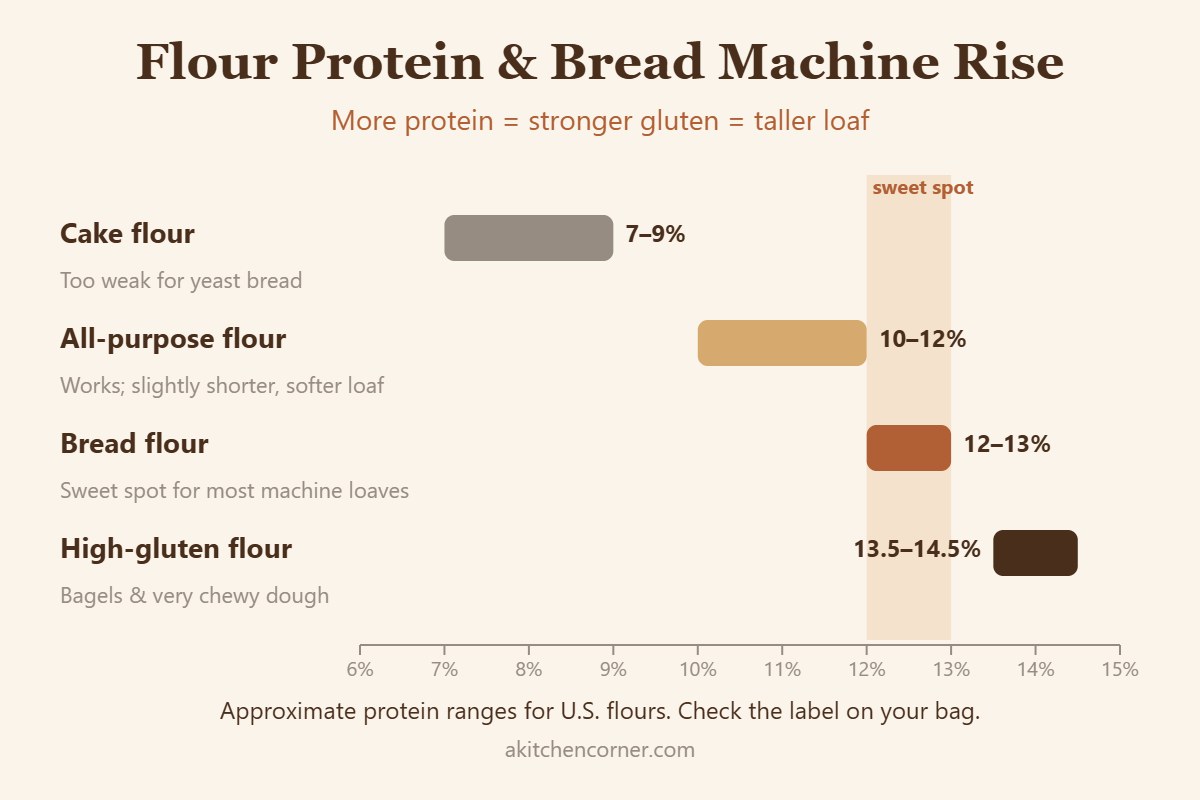
Fix: use bread flour for the tallest, lightest loaves, or add a little vital wheat gluten to all-purpose flour.
8. The Rapid or Express Cycle
Rapid cycles shorten rising time to get bread out faster. They often need extra yeast and warmer ingredients, and even then they tend to make denser bread.
Fix: use the basic or white cycle for the best texture. Save rapid cycles for recipes written specifically for them.
9. A Cold Kitchen or Cold Ingredients
Milk, eggs and butter straight from the fridge cool the dough down. In a cold kitchen, the machine may not keep the dough warm enough to rise fully.
Fix: bring milk, eggs and butter to room temperature first, or warm the milk slightly. Keep the machine away from drafty windows in winter.
10. Underbaking or Slicing Too Soon
A gummy, doughy middle can mean the loaf didn’t bake long enough, or that it was sliced while still hot. Bread keeps cooking as it cools.
Fix: try the medium or dark crust setting for large loaves, remove the loaf from the pan right away, and let it cool for at least 1 hour before slicing.
Also Check
- Low-sugar or sugar-free recipes: a little sugar helps yeast get started. Removing it entirely can give a shorter loaf.
- Too little dough for the pan: a 1-lb recipe in a large pan can bake up short and wide. Match the recipe to the loaf size setting.
- Kneading paddle not seated properly: if the dough isn’t kneaded well, gluten won’t develop. Check that the paddle clicks firmly onto the shaft.
Your Next-Loaf Checklist
- Test your yeast if it’s been open a while.
- Weigh the flour.
- Use lukewarm (75–80°F) water and room-temperature ingredients.
- Check the dough ball 5 minutes into kneading and adjust.
- Use bread flour and the basic cycle for white loaves.
- Cool the loaf for an hour before slicing.
Did your loaf rise well and then sink? That’s a different problem. Read our guide to why bread machine bread collapses.
Frequently Asked Questions
Why is my bread machine bread so heavy?
Usually the dough didn’t rise enough. The most common causes are old yeast, too much flour, not enough liquid, or water that was too hot or cold. Test the yeast, weigh the flour and check the dough consistency during kneading.
How do I make bread machine bread lighter and fluffier?
Use fresh yeast and bread flour, weigh the flour, use lukewarm water, choose the basic cycle instead of rapid, and add a tablespoon of dry milk or a little extra sugar for a softer crumb.
Why is my bread machine bread doughy in the middle?
It may be underbaked, or it was sliced while still hot. Try a darker crust setting, remove the loaf from the pan right away, and let it cool for at least an hour before cutting.
Does vital wheat gluten make bread less dense?
Yes, especially for whole wheat and rye loaves. Add about 1 tablespoon per cup of whole grain flour to strengthen the dough so it rises higher.
Can I use all-purpose flour in a bread machine?
Yes, but loaves are usually a little shorter and denser than with bread flour. Add a teaspoon or two of vital wheat gluten per cup if you want a taller loaf.
Why did my bread not rise in the bread machine?
Most often the yeast is old or was killed by hot water, or salt came into direct contact with it. Test the yeast, use lukewarm water and keep salt away from the yeast when loading the pan.
Final Thoughts
Dense bread machine bread is almost always a rise problem, and most of the fixes take seconds: fresh yeast, weighed flour, lukewarm water and the right cycle. Change one thing at a time, and you’ll quickly find what your machine and your kitchen need for a light, fluffy loaf.
Leave a Reply