
Homemade bread tastes amazing on the first day, and that’s exactly the problem. Without the preservatives found in store-bought loaves, it dries out and goes stale much faster. Store it the wrong way and it can turn hard in a day, or soggy and moldy in three.
The good news is that a few simple storage habits make a big difference. In this guide, we explain how to store homemade bread at room temperature, why the fridge is usually a mistake, when to freeze, and how to bring stale bread back to life.
The Quick Answer
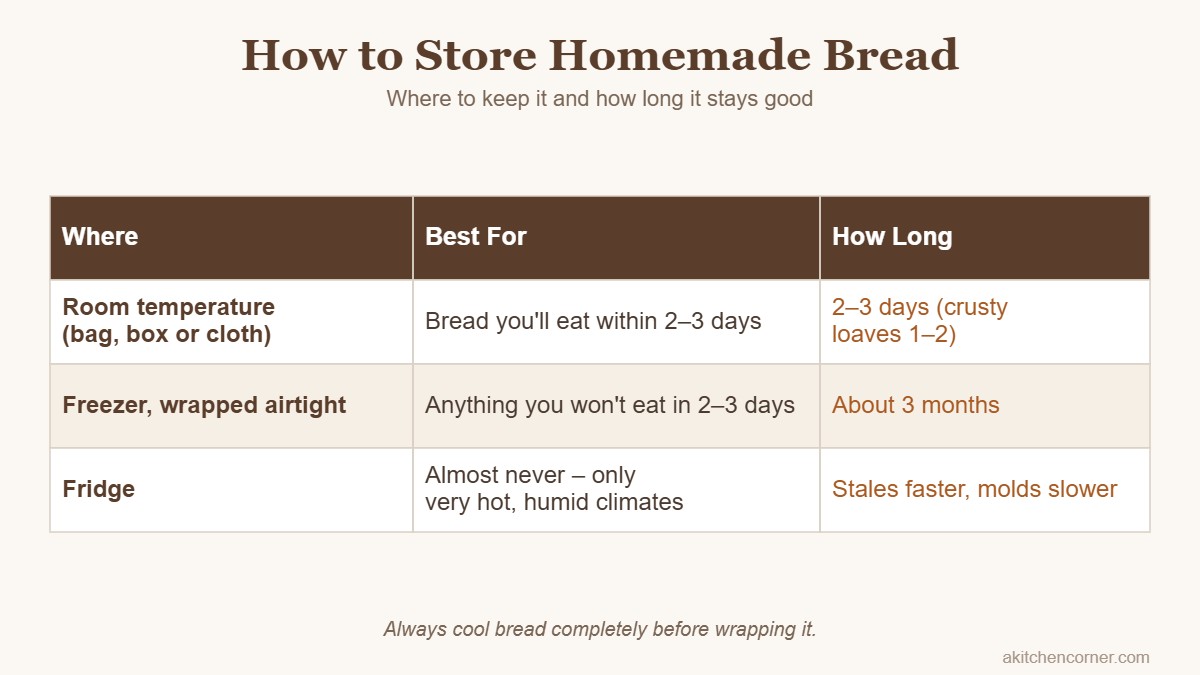
| Where | Best For | How Long |
|---|---|---|
| Room temperature (bread bag, box or cloth) | Bread you’ll eat within 2–3 days | 2–3 days (crusty loaves 1–2 days) |
| Freezer (wrapped airtight) | Anything you won’t eat within 2–3 days | About 3 months for best quality |
| Fridge | Almost never. Only in very hot, humid climates to slow mold | Stales faster, but molds slower |
Step 1: Cool the Bread Completely
Always let bread cool fully on a wire rack before storing it: about 2 hours for a sandwich loaf and 3–4 hours for a large boule. Wrapping warm bread traps steam, which makes the crust soggy and encourages mold.
If you bake in a bread machine, take the loaf out of the pan as soon as the cycle ends. Leaving it in the machine makes the crust damp.
Step 2: Choose the Right Storage for Your Bread
Soft Sandwich Bread and Bread Machine Loaves
Soft loaves stay freshest in a plastic bread bag or airtight bread box. Plastic keeps the moisture in, so the crumb stays soft. Squeeze out the extra air before closing the bag.
Crusty Loaves (Sourdough, Baguettes, Boules)
Plastic keeps crusty bread soft, which ruins the crust. Instead:
- First day: leave it cut side down on a cutting board, uncovered
- Days 2–3: wrap it in a cotton or linen bread bag, a clean kitchen towel or a paper bag
- Longer: slice and freeze it
Enriched Breads (Brioche, Challah, Cinnamon Bread)
Butter, eggs and sugar help these breads stay soft a little longer. Store them in a plastic bag or bread box for 2–3 days, then freeze the rest.
Quick Breads (Banana Bread, Zucchini Bread)
Wrap them tightly in plastic wrap or foil. Because they’re moist, refrigerate them after 2 days in warm weather, or freeze them.
Why You Shouldn’t Store Bread in the Fridge
Bread goes stale mostly because its starches recrystallize and push out moisture, a process called retrogradation. It happens fastest at refrigerator temperatures, so bread kept in the fridge can go stale several times faster than bread on the counter.
The only exception is a very hot, humid kitchen where mold is a bigger risk than staling. Even then, the freezer is usually a better choice.
Bread Box, Bag or Cloth: What’s Best?
| Storage | Pros | Cons | Best For |
|---|---|---|---|
| Plastic bread bag | Keeps bread soft, cheap | Softens crusts, can trap moisture | Sandwich bread, enriched bread |
| Bread box | Balances moisture, keeps counter tidy | Takes up space | Most homemade loaves |
| Cotton or linen bag | Breathable, keeps crust better | Bread dries faster | Crusty loaves |
| Paper bag | Protects crust | Dries bread quickly | Baguettes, 1–2 days |
| Beeswax wrap | Reusable, breathable | Needs care | Half loaves, crusty bread |
| Airtight freezer wrap | Stops staling for months | Needs thawing | Anything kept longer than 2–3 days |
Step 3: Freeze What You Won’t Eat Soon
If you won’t finish the loaf in 2–3 days, freeze it while it’s fresh. Slice it first if you’ll use it for toast or sandwiches, wrap it tightly, and press out the air. Frozen properly, homemade bread keeps its quality for about 3 months.
For the full method, including vacuum sealing without crushing the loaf, see our guide on how to freeze homemade bread.
How to Tell If Bread Has Gone Bad
- Mold: fuzzy green, white, black or blue spots. If you see any, throw the whole loaf away. Mold can spread through bread beyond the visible spots.
- Sour or musty smell
- Stale but no mold: it’s safe to eat, and you can refresh it
How to Revive Stale Bread
- Whole or half loaf: run it quickly under the tap to dampen the crust, then bake at 350°F (175°C) for 6–10 minutes. The steam softens the crumb and crisps the crust.
- Slices: toast them.
- Too far gone? Turn it into croutons, breadcrumbs, French toast, bread pudding or panzanella.
Tips to Make Homemade Bread Last Longer
- Slice from the middle of a round loaf and press the two halves together to protect the cut faces
- Slice only what you need, since a whole loaf stays fresher than slices
- Add a little fat or sugar (butter, oil, milk, honey) to everyday loaves for a softer crumb that stales more slowly
- Bake smaller loaves if you don’t eat bread quickly
- Use a bread machine delay timer to bake fresh loaves more often instead of big batches
Frequently Asked Questions
How long does homemade bread last?
About 2–3 days at room temperature, 1–2 days for crusty loaves, and around 3 months in the freezer.
What is the best way to store homemade bread?
Let it cool completely, then store it in a bread bag or bread box at room temperature for up to 2–3 days. Freeze anything you won’t eat in that time.
Should homemade bread be stored in the fridge?
Usually not. Bread goes stale faster in the fridge. Use the freezer for longer storage instead.
How do you keep homemade bread soft?
Store soft loaves in a plastic bag or airtight bread box once fully cool, and include a little butter, oil or milk in the recipe.
How do you store crusty bread?
Leave it cut side down on a board for the first day, then wrap it in a cotton bag, towel or paper bag. Freeze it if you won’t eat it within 2 days.
Can I eat bread with a little mold if I cut it off?
No. Mold can spread through soft foods like bread beyond what you can see. Throw away the whole loaf.
Final Thoughts
The best way to store homemade bread is simple: cool it completely, keep it at room temperature in the right wrap for a couple of days, and freeze the rest. Skip the fridge, refresh stale loaves in the oven, and you’ll waste far less of the bread you worked to bake.
Leave a Reply