

If you’ve been on the fence about getting a bread machine and are tired of vertical loaves that don’t look or slice like store-bought bread, the West Bend Bread Maker Machine Review might catch your eye.
I’ve gone through tons of user reviews, baked-with-it stories, and troubleshooting tips to put together a real-world look at what this machine is like to live with. Spoiler: it can be awesome, but it’s not without quirks.
| Category | Details |
|---|---|
| Loaf Shape | Horizontal loaf pan creates bakery-style loaves (looks more like store-bought bread). |
| Capacity | 2 lb loaf size, suitable for families or frequent bakers. |
| Ease of Use | Simple controls, straightforward programs, great for beginners. |
| Programs | Handles white, whole wheat, dough, and basic bread varieties. |
| Performance | Consistent results, even from the very first loaf; reliable week after week. |
| Price/Value | Affordable compared to premium machines; solid value for money. |
| Pros | Beginner-friendly, great loaf shape, reliable, encourages baking habit, good value. |
| Cons | Paddle sticks in loaf, limited features, basic build, no artisan or advanced settings. |
| Maintenance | Easy cleanup overall, but paddle removal can be a small hassle. |
| Tips for Use | Follow recipes at first, measure carefully, check dough early, oil paddle, remove bread quickly. |
| Best For | Beginners, families, budget-conscious buyers, anyone who wants simple and consistent bread baking. |
CHECK PRICE ON AMAZON
Key Features – West Bend bread maker
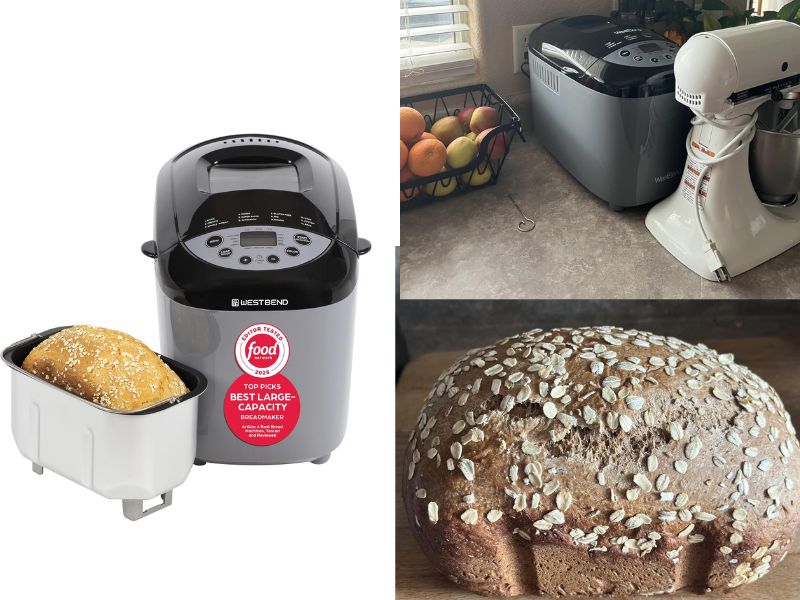
When people first start using the West Bend, one of the big “aha” moments is the loaf shape. Unlike most bread machines that spit out tall, awkward blocks, this one makes a nice horizontal loaf that actually looks like something you’d grab at a bakery. It also keeps things simple with a straightforward control panel, so you don’t feel like you need a degree in rocket science to bake bread.
- Horizontal loaf shape: Unlike vertical-style machines, this one makes a bakery-style horizontal loaf. You can bake 1.5 lb, 2 lb, 2.5 lb, or 3 lb loaves.
- Double kneading paddles: Two paddles instead of one, which means better mixing and less babysitting when adding raisins, nuts, or other mix-ins.
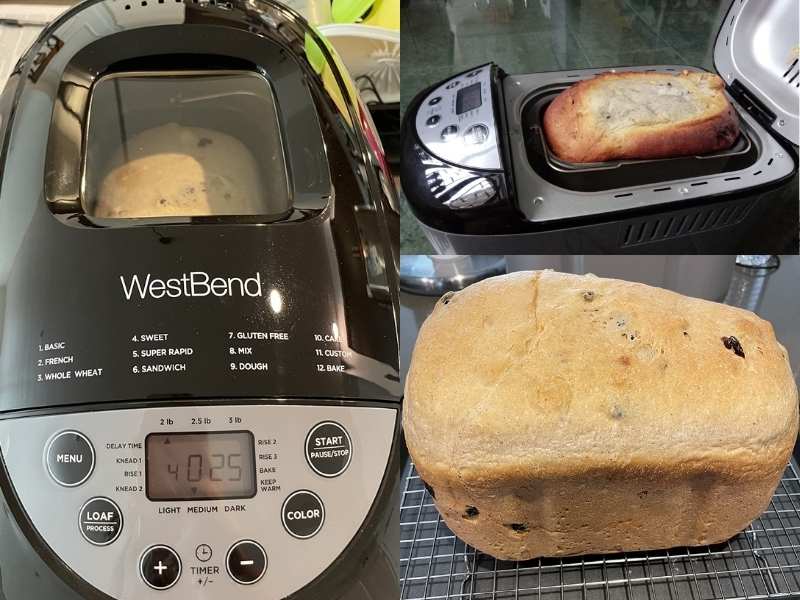
- Customizable settings: A “Menu 11” custom cycle lets you tweak knead, rise, and bake times. This is a lifesaver for high-altitude bakers and folks making gluten-free bread.
- Dedicated Gluten-Free program: The GF setting only has one knead cycle, which is essential for gluten-free baking.
- Viewing window & LCD display: You can watch your bread rise and bake, though the screen is a standard black LCD that’s hard to read in dim light.
- Countdown timer & delay start: Set it to wake up to fresh bread.
- Quiet operation: Runs much quieter than some older brands.
- No preheat: Requires you to use ~80°F water from the start since the machine doesn’t warm ingredients first.
Pros
The biggest pro that keeps coming up is how easy it is. Most people say their very first attempt turned out better than expected, which isn’t always the case with bread machines. It’s not just about taste—it’s also about confidence.
You feel like you can experiment without wasting ingredients. And if you’re baking weekly (or more), the consistent results and easy cleanup start to really matter.
- Bakery-style loaves: People love that the loaves come out looking like store bread — perfect for sandwiches and toast.
- Solid results with the right ingredients: Use bread flour + rapid-rise yeast and you’ll usually get a soft interior with a crunchy crust.
- Custom control: You can fine-tune cycles to deal with altitude issues or just personal preference.
- Gluten-free friendly (with tweaks): The dedicated GF mode skips the second knead, making it one of the few budget-friendly machines that can handle gluten-free recipes decently.
- Durable build: The pan and paddles hold up better than some other brands (one reviewer compared it to an Oster and found West Bend sturdier).
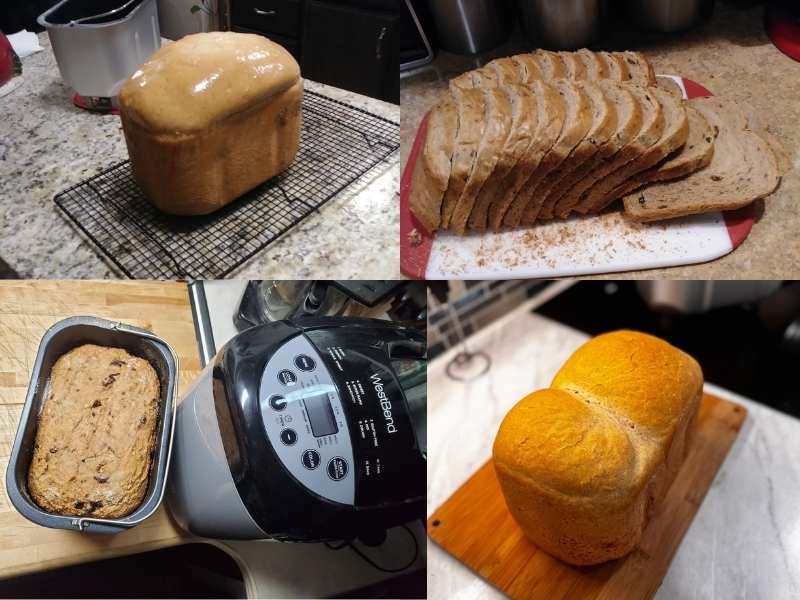
- Versatility: Users have made white, wheat, sourdough, raisin bread, sweet breads, Hawaiian, Amish bread, even banana bread.
- Easy cleanup: Pan and paddles clean well with a small brush; nothing sticks badly.
- Good price for the features: Many pointed out you’d normally pay more for a machine with dual paddles and a custom cycle.
CHECK PRICE ON AMAZON
Cons – West Bend Bread Maker Machine Review
Of course, it’s not perfect. A few people pointed out quirks worth knowing before buying. For instance, the paddle can sometimes get stuck in the loaf, which means you’ll be fishing it out after baking.
And while it makes a solid loaf, it’s not the most advanced machine on the market—if you want fancy artisan settings or techy extras, you won’t find them here. Also, if you’re a heavy baker, the build can feel a little lightweight compared to pricier machines.
- Learning curve: The included recipe book is… meh. Most people ditch it for better cookbooks (Better Homes & Gardens Bread Machine Cookbook gets recommended).
- Over-baking tendency: Default bake times can make the crust too dark, especially with sweet breads. Light crust setting is the safer bet.
- Custom program is limited:
- You can’t fully eliminate the second knead (even if set to “0,” it still spins once).
- Max bake time is only 80 minutes, which isn’t long enough for some recipes.
- Custom settings reset if the machine is unplugged for more than 5 minutes.
- Pan quirks: Inserting/removing the pan can be finicky. If paddles aren’t aligned right, it won’t lock in easily. Getting bread out sometimes requires prying.
- Paddle dents: Like all bread machines, the paddles leave holes in the loaf. You can remove them before final rise, but it’s a manual step.
- Customer service: Multiple reviewers complained about West Bend not responding to emails or calls. That’s a red flag if warranty issues matter to you.
- Inconsistent results over time: A few users said the machine worked great for months, then suddenly loaves stopped rising properly.
- Bulky size: It’s fairly deep, so you may need to rearrange cabinets or get bigger bread containers for storage.
- LCD screen: Not backlit, so tough to read in low light.
- Gluten-free mode needs babysitting: You’ll probably need to scrape down the sides, smooth the top, and bake longer with the manual Bake program.
Tips from Real Users
Most users figured out some tricks over time. One common piece of advice is to actually follow the included recipes first. Once you understand how the machine behaves, then you can branch out and experiment with your own.
Measuring ingredients precisely also makes a big difference—just a little extra flour or yeast can throw things off. And if you’re tired of digging the paddle out of the bread, lightly oiling it before baking can help.
- Measure by weight: Stick to West Bend’s guide of 135g per cup of bread flour for consistent results.
- For high-altitude baking: Reduce yeast slightly and tweak rise/bake times with the custom menu.
- Remove paddles mid-cycle: Pause during the third rise, take out the paddles, shape dough, then restart. Your loaf will look much nicer without craters.
- Stick to 2 lb loaves: The 2 lb size seems to give the most reliable results; smaller loaves come out a bit lopsided.
- Go light on crust: Especially with sweet or high-sugar recipes — prevents rock-hard crust.
- Align paddles first: Place paddles at 12 and 6 o’clock before adding ingredients to make pan insertion easier.
- Clean smart: Use a small bristle or bottle brush to get dough out of the paddle holes. Soak pan inside only. Don’t dishwasher it.
- Thermometer check: If the crust seems too hard, use an instant-read thermometer to test doneness and pull it early.
- Better recipes = better bread: Skip the manual’s skimpy recipes. Look up online ones or grab a dedicated bread machine cookbook.
- For gluten-free: Spray the top of the loaf, scrape the sides during mixing, and bake an extra 30–50 minutes on “Bake” mode once the cycle finishes.
Final Thoughts
The West Bend Bread Maker is kind of like that friend who’s amazing once you get to know them but a little frustrating at first. Out of the box, it can be hit-or-miss if you rely only on the included recipes and default settings. But if you’re willing to experiment, weigh your flour, use good yeast, and maybe babysit the process a bit, it can crank out loaves that rival bakery bread — soft inside, crisp outside, and perfectly sandwich-ready.
If you’re gluten-free, it’s not perfect but it’s workable with some manual tweaks. If you’re at high altitude, the custom menu is a big win. And if you’re just a casual baker? Stick with the 2 lb loaf, light crust, and you’ll be in good shape.
CHECK PRICE ON AMAZON
The biggest drawbacks are the quirks (pan insertion, paddle dents, over-baking on defaults) and West Bend’s lack of responsive customer service. If those don’t scare you off, this is a solid, feature-rich bread maker at a price point that’s hard to beat.
Would I recommend it? Yes — but only if you’re the type who doesn’t mind a bit of trial and error to dial it in. Once you figure out its sweet spots, it’s a keeper.
Leave a Reply