
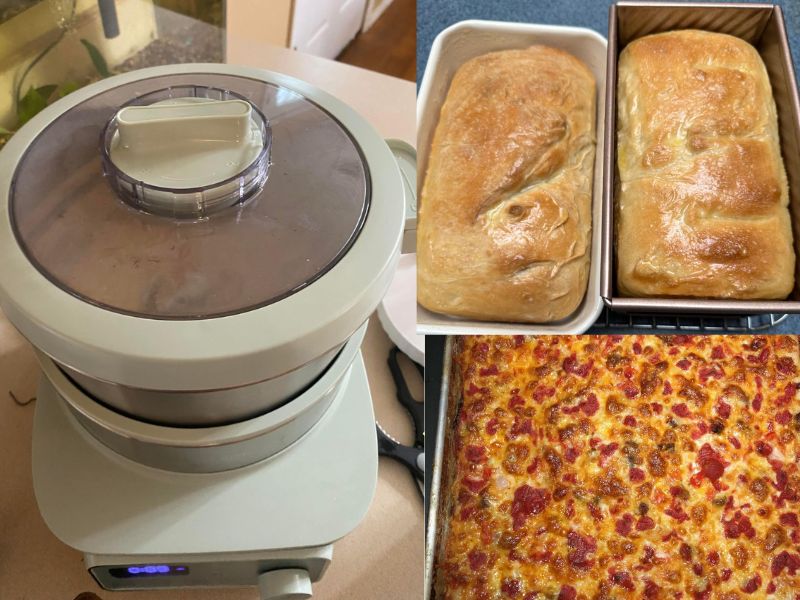
Before buying the MOKKOM Electric Dough Maker, I already owned both a bread machine and a stand mixer. I had been making dough for years by hand and with machines, but I wanted something more focused on dough itself, not whipping cream or baking the bread for me. What really sold me was the idea of mixing, kneading, and proofing in one bowl without transferring anything.
After spending real time with this machine and running many batches of bread and pizza dough through it, I can say it has changed the way I prep dough, even though it comes with a few quirks.
MOKKOM Electric Dough Maker – Overview Table
| Item | Details |
|---|---|
| Product Name | MOKKOM Electric Dough Maker |
| Type | Electric dough mixer with proofing |
| Capacity | 6 Liters |
| Power | 200W |
| Speeds | 2 |
| Voltage | 120V |
| Controls | Push button |
| Proofing Modes | Winter & Summer |
| Delay Start | Yes |
| Bowl | Stainless steel |
| Attachments | Dough paddle + beaters |
| Stability | Suction cups base |
| Best Use | Bread and pizza dough |
| Not For | Very wet, high-hydration dough |
| Noise | Moderate while mixing |
| Dimensions | 11.4″ × 9.6″ × 13.5″ |
| Weight | 4.51 kg |
| Color | Green |
| Price | CHECK PRICE ON AMAZON |
Why I Bought the MOKKOM Electric Dough Maker?
I bake bread and pizza often, sometimes for family and sometimes for small orders, so I’m always open to tools that reduce workload. I don’t need a giant 7-quart stand mixer, and I rarely whip cream or cookie dough. What I really wanted was something that could knead dough and handle fermentation consistently.
The MOKKOM Electric Dough Maker fit that idea perfectly. It doesn’t bake the bread, but it does everything up to shaping. Since getting it, my regular bread machine barely gets touched, because this machine lets me make specialty breads and pizza dough that I wouldn’t normally do in a standard bread maker.
Unboxing, Setup, and First Impressions
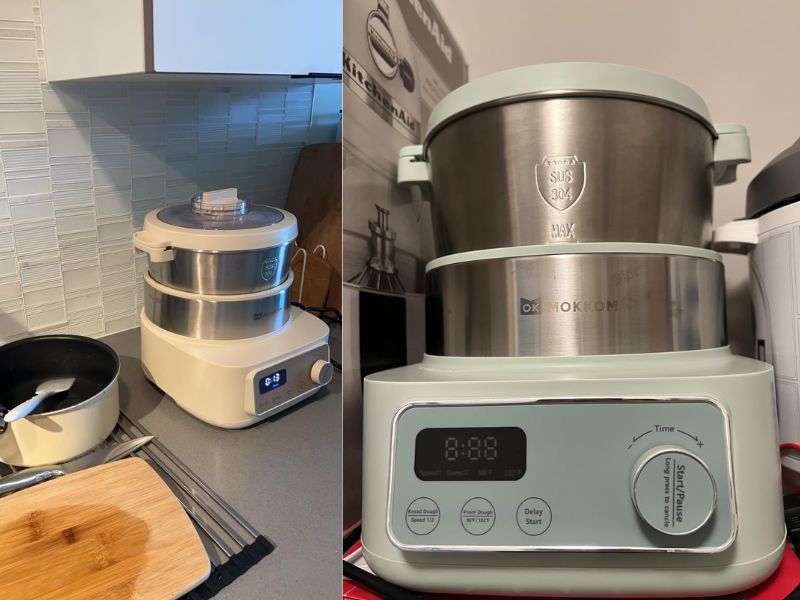
Out of the box, the machine looks compact but sturdy. The stainless steel bowl feels solid, and the suction cups underneath hold it firmly on my counter. Even when I’m mixing heavier dough, it doesn’t creep forward or rock around.
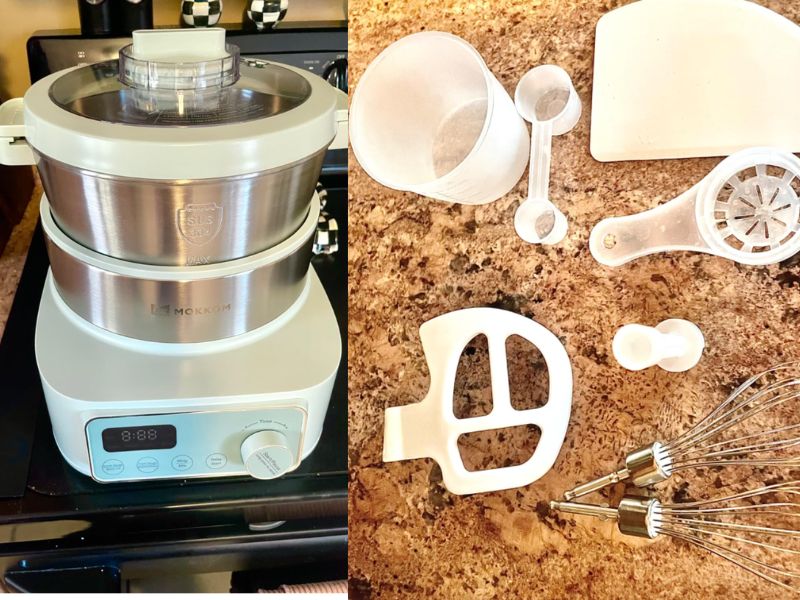
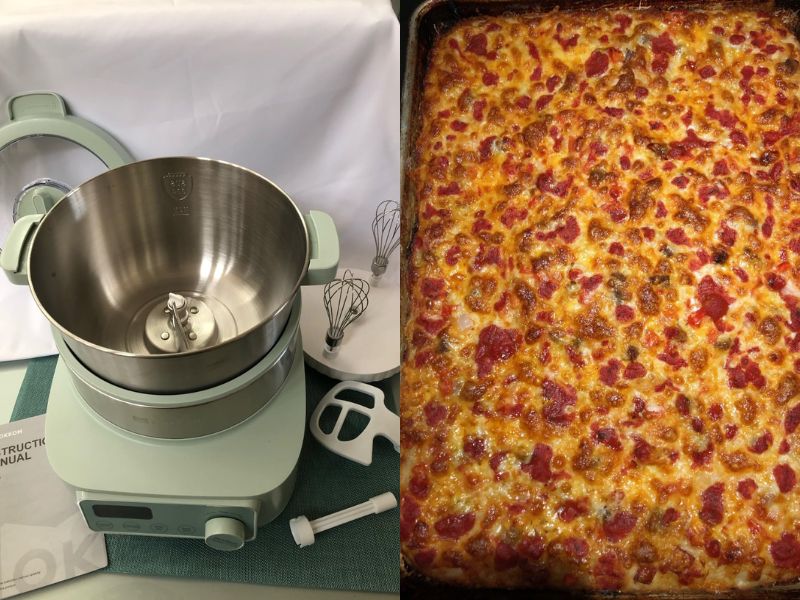
It comes with a lid, a main dough paddle, and a few extra attachments that look like whisk beaters. I’ll be honest: the instructions don’t explain all of them very well. There were a couple of plastic parts that I didn’t immediately recognize, and I had to experiment a bit to understand what goes where.
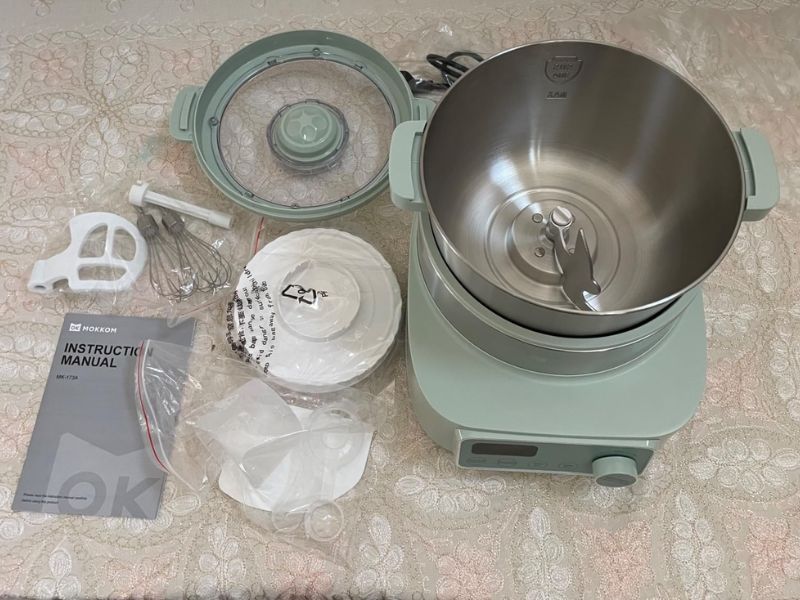
The screen looks slightly cloudy, but it’s readable. My bigger issue was the buttons. Sometimes they don’t register on the first press, so I end up tapping a few times in slightly different spots until the function finally activates. It works, but it doesn’t feel smooth or confidence-inspiring the first few times you use it.
Mixing and Kneading With the Machine
Most of my batches use between 400g and 600g of flour, and occasionally I do a double batch around 500g+. For these sizes, the MOKKOM Electric Dough Maker handles the job well.
When I press knead, the machine starts by mixing, then goes into kneading cycles. One thing to understand is that kneading is not continuous. It pauses every few seconds and then continues again. At first, I found that annoying, but the dough still develops properly by the end of the cycle.
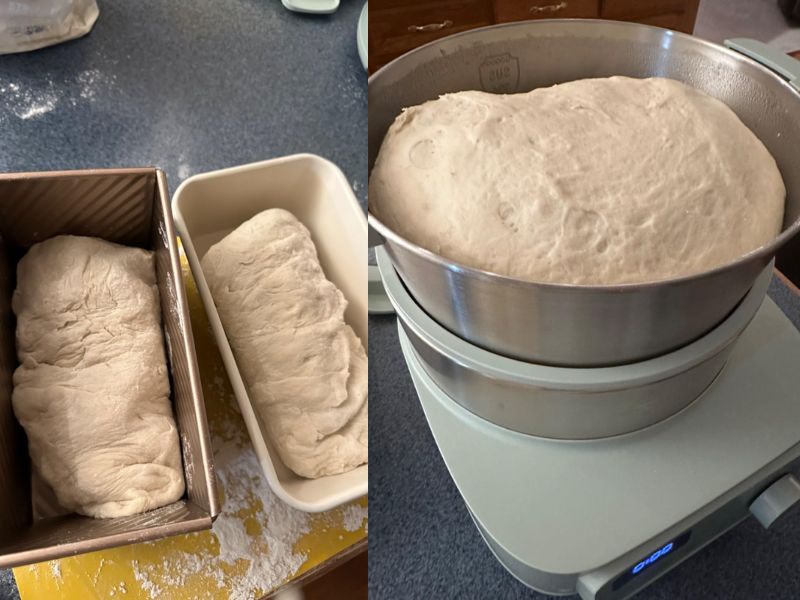
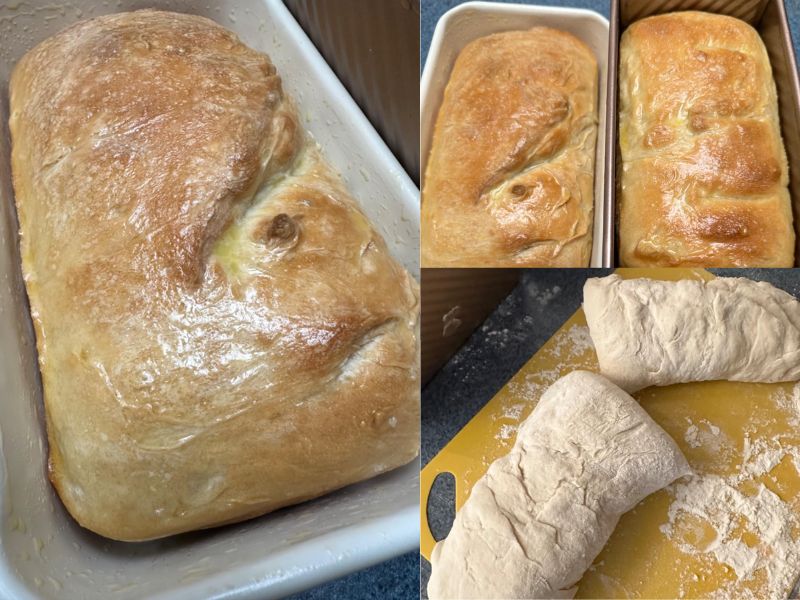
For pizza dough and basic bread dough, the results are consistently good. The dough comes together smooth and elastic, and after a short hand finish on the counter, it’s ready to shape.
Where I ran into limits was with high-hydration dough. When I push hydration to around 65–70%, the dough turns into more of a thick batter and doesn’t knead as nicely. Because the paddle and timing aren’t adjustable, very wet dough just isn’t this machine’s strength. For normal bread and pizza dough, though, it performs very well.
One other thing I noticed early on was a slight burning smell during the first uses. It didn’t continue long-term, and I assume it was just the motor breaking in, but it’s something I picked up on in the beginning.
Proofing and Fermentation
The proofing function is honestly my favorite part. After mixing, I don’t have to move the dough to another bowl, cover it, and hunt for a warm spot. I just press proof and walk away.
There are winter and summer proof settings. Winter runs a bit warmer and summer a bit cooler, though the machine doesn’t explain this very clearly. In my kitchen, both worked similarly, but on winter mode I usually get a nicely risen dough in a little over an hour.
Typical first proof for me is about 60 to 90 minutes. The dough rises evenly and consistently, and the proofing stage is completely silent, which is nice after hearing the machine mix earlier.
I also use the delay start feature for autolyse. I load flour and water, set a delay, and let the machine rest the dough before kneading starts. Being able to set it and walk away is one of the biggest conveniences.
Bowl Design and Dough Removal
The stainless steel bowl is easy to clean, but it has a slightly striated interior instead of being perfectly smooth. That makes sticky dough harder to remove, especially sourdough. I always flour my hands and the bowl heavily before pulling the dough out, otherwise it sticks.
After many batches, I noticed a little surface change in one of the striations. I lightly rubbed it with steel wool and the issue never came back, but it did make me wish the bowl were smoother from the start.
The paddle screws on and off, but that’s not obvious at first. It uses reverse threading, so you tighten it left and loosen it right. Once I figured that out, cleaning got easier, though I still don’t remove it every single wash because it adds time.
Noise, Lid, and Kitchen Mess
While mixing, the machine is noticeable, but not outrageous. It’s quieter than slamming dough on the counter and, for me, quieter than my big stand mixer. During proofing, it’s silent.
The lid is something I didn’t expect to love, but I do. With the lid on, flour stays inside the bowl instead of coating my kitchen. That alone makes the workflow much cleaner.Attachments, Parts, and Accessories
Besides the main dough blade, the machine comes with whisk-style attachments. I rarely use them. They feel more fragile and gimmicky compared to the dough paddle.
 There is also a small white plastic piece that screws on top of the attachments to hold them in place. It’s tiny and easy to lose, so now I keep all the small parts in a container instead of leaving them loose in a drawer.
The included measuring cup didn’t match my standard cups, so I ignore it and use my own.
Instructions and Learning Curve
The instruction booklet is a mixed bag. It gives you a basic recipe for two loaves, but not much beyond that. It oddly starts with noodles, yet doesn’t really guide you on sweet dough, specialty bread, or hydration adjustments.
Some steps assume you already know how to bake bread. Baking temperatures and times after proofing aren’t very clear, so I rely on my own experience and recipes instead of the booklet.
Once you understand how the machine behaves, it becomes easy to use, but beginners may need to experiment.
Everyday Use in My Kitchen
I mainly use the MOKKOM Electric Dough Maker for pizza dough and standard sandwich bread. I like that I can mix, proof, and rest the dough in one machine without dirtying extra bowls.
Since buying it, my old bread machine barely gets used. I still shape and bake manually, but all the heavy prep work is handled for me. It saves time, keeps my kitchen cleaner, and makes dough prep much less tiring.
What I Like
- It combines mixing and proofing in one workflow.
- It handles normal bread and pizza dough very well.
- The suction cups keep it stable.
- The lid prevents flour mess.
- Proofing is consistent and quiet.
- Delay start is great for autolyse.
What I Don’t Like
- The buttons can be finicky.
- Kneading pauses instead of running continuously.
- It struggles with very wet dough.
- The bowl’s interior makes sticky dough harder to remove.
- Instructions and attachment explanations are unclear.
- Small parts are easy to lose.
Who I Think This Machine Is For
The MOKKOM Electric Dough Maker is perfect if you bake bread or pizza often and want to stop hand kneading. It’s great if you care more about dough prep than baking automation, and if you like having proofing built right into your workflow.
It’s not ideal if you want a machine that also bakes the bread, or if you constantly work with very high-hydration artisan doughs.
Final Thoughts
After using the MOKKOM Electric Dough Maker regularly, I see it as a practical, hardworking tool rather than a flashy gadget. It has a learning curve and a few design annoyances, but once you understand it, it genuinely simplifies dough making.
For me, it turned dough prep from a tiring chore into a mostly hands-off process, and that alone makes it worth having on my counter.
If your goal is easier, cleaner, and more consistent dough, the MOKKOM Electric Dough Maker is a solid addition to your kitchen.
Leave a Reply