

I’ll be honest — when I first bought the Cuisinart Bread Maker, I wasn’t exactly sure what I was getting myself into. I’ve always liked the idea of fresh, homemade bread, but I didn’t have the time (or energy) to knead, rise, and babysit dough all day. I figured a bread maker might be the solution, and after a ton of research (plus my long-standing love of Cuisinart products), I decided to give this model a try.
Now that I’ve used it to make all kinds of bread — from basic white to French, wheat, challah, apple bread, and even jam — I feel like I’ve been through enough trial and error to give you a real, no-fluff review of what this machine can (and can’t) do.
Summarize Table
| Model | Cuisinart Bread Maker (CBK-110) |
| Loaf Sizes | 1 lb, 1.5 lb, 2 lb |
| Crust Options | Light, Medium, Dark |
| Programs | 12 settings: Basic, French, Whole Wheat, Dough, Jam, Sweet, Gluten-Free, etc |
| Key Features | Ingredient dispenser, viewing window, 13-hour delay timer, quiet operation |
| Ease of Use | Beginner-friendly with intuitive buttons and a clear display |
| Bread Quality | Fluffy inside, crisp crust (once dough balance is right) |
| Pros | – Compact design – Easy to use – Ingredient dispenser – Reliable results |
| Cons | – Large slice size – Suction cups not very strong – Recipe book not reliable |
| Best For | Beginners, casual bakers, anyone wanting easy homemade bread |
Check Price on Amazon
First Impressions: Compact, Sleek, and Surprisingly Quiet
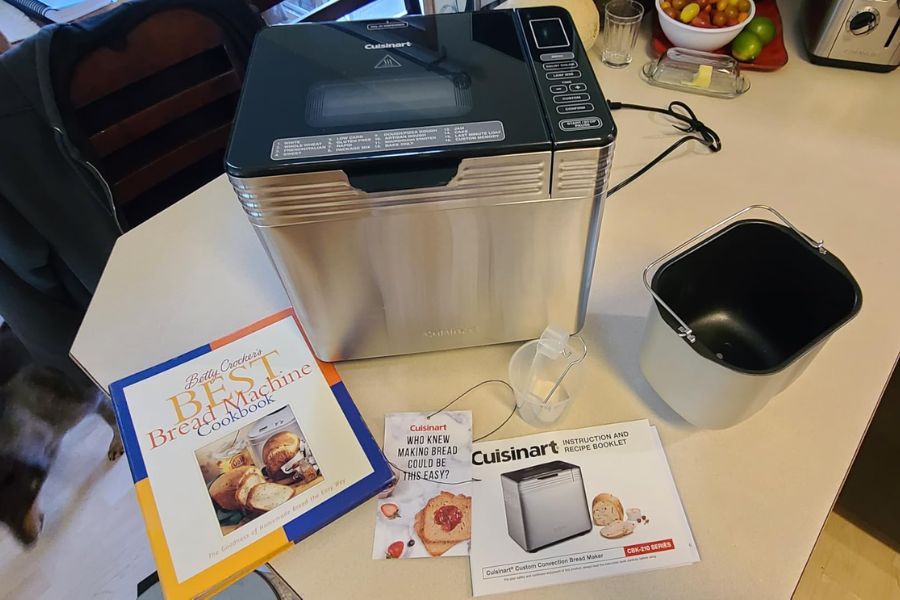
One of the first things I appreciated about this machine was how compact it is. I live in a smallish apartment, and kitchen counter space is a luxury, but this machine fits just fine and even looks nice sitting out.
It has a clean stainless steel design, and the LCD screen is clear and easy to read. Compared to an older bread maker I used to borrow, this one is way quieter — even during the kneading phase, it just hums along without sounding like a mini construction site.
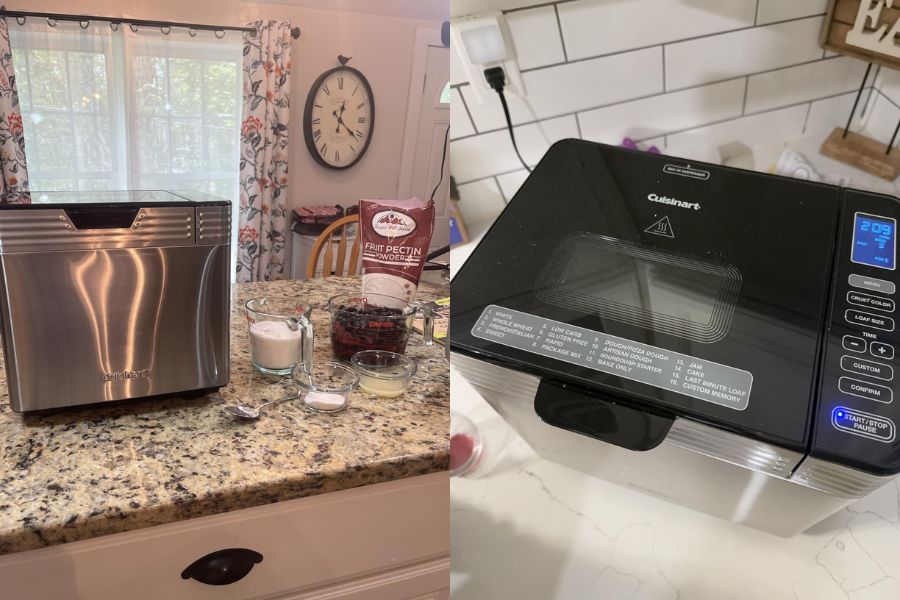
There’s a nice little viewing window on top too, which I didn’t realize I’d enjoy so much. It’s kind of satisfying to peek in and watch the dough transform into a beautiful loaf without needing to open the lid.
Getting Started: Friendly for Beginners, But Read the Fine Print
I’d never made bread from scratch before this machine. The instruction manual was easy to follow, and the control panel is pretty intuitive.
There are 12 pre-programmed settings, so you can make everything from basic white and whole wheat to gluten-free bread, dough, and even jam. I also love that you can customize the loaf size (1, 1.5, or 2 lbs) and the crust color (light, medium, dark).

That said, there’s definitely a learning curve — especially if you’re like me and don’t bake much. My first loaf was a gooey mess. I followed the recipe to the letter, but the dough looked too wet.
I wasn’t sure if I should intervene, and by the time I tried to remove the paddle after the 10-beep signal, I had dough all over my hands and the machine. Still, it baked into something edible (and pretty tasty, honestly), but it was a bit of a reality check.

Trial, Error, and Actual Success
After that first attempt, I started doing a bit of research. Turns out the flour-to-water ratio is everything. Even if you’re using a scale, you need to watch how the dough is forming during the kneading process.
I learned to poke the dough — if it sticks too much to your finger, it needs more flour. Once I started making those little adjustments during the first kneading cycle, my loaves turned out so much better.

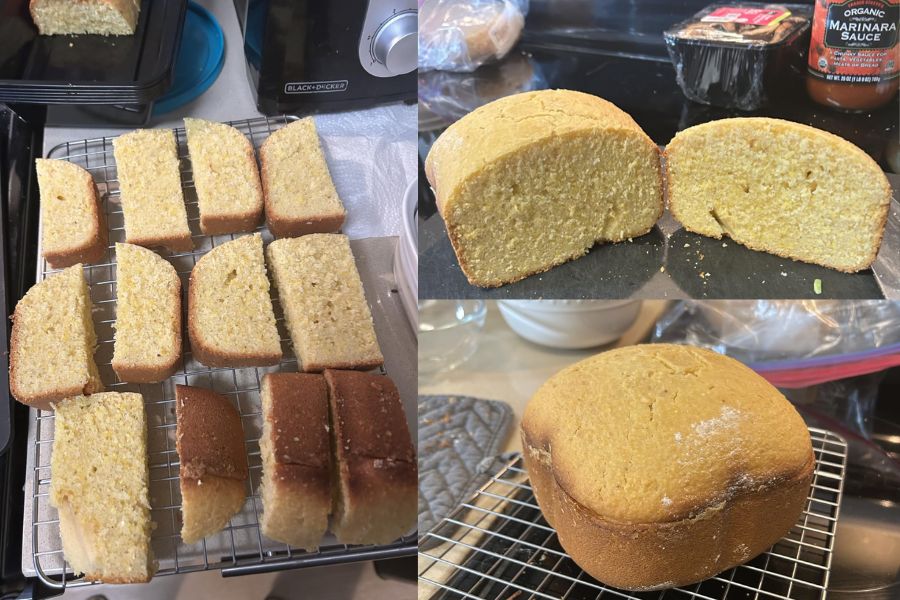
I’ve made white bread, French bread, sandwich loaves, challah, and even a Hawaiian sweet bread that was chef’s kiss. The crust comes out beautifully golden, and the inside is soft, fluffy, and evenly risen. Every time I pull a fresh loaf out of the pan, my kitchen smells amazing.
As for sourdough — I tried the machine’s sourdough setting twice. Both times were a bit of a fail. To be fair, I didn’t use a homemade starter; I bought one online.

But the machine’s instructions kind of oversimplified the process, and I wasn’t ready for the science project that is true sourdough. So now, I bake sourdough separately in a Dutch oven and leave the machine to handle quicker breads.
What I Love About This Bread Maker?
There are quite a few things this machine gets right:
- Ingredient Dispenser: One of my favorite features is the add-in drawer. If I want to make raisin bread or throw in some nuts or seeds, the machine adds them at the right time automatically. No guessing.
- Paddle Removal Option: After it beeps ten times, I can take the dough out, remove the paddle, and plop the dough back in. That way, I don’t end up with a giant hole in the bottom of the loaf.
- Delay Timer: I can set it the night before and wake up to warm bread in the morning — though, warning, if your machine moves during kneading like mine did once, don’t leave it too close to the edge. It danced right off the counter. To Cuisinart’s credit, they replaced the machine after I emailed them a photo of the damage. Solid customer service.
- Dough-Only Setting: If I feel like getting fancy, I use the dough setting to make rolls or artisan loaves and bake them in the oven. Super flexible.
- Jam Setting: Total bonus — the jam function actually works! I made strawberry and blueberry jams with minimal effort and maximum deliciousness.

Not So Great: A Few Quirks and Caveats
This machine isn’t perfect. Here are a few things I didn’t love:
- Weird Loaf Shape: The bread pan creates shorter, squatter loaves. One slice is HUGE. Great for sandwiches, but they don’t fit in my standard toaster. If you’re making toast every morning, this might bug you.
- Suction Cups Aren’t Strong: Like I mentioned earlier, during heavy kneading the machine can shift or even fall off the counter. Definitely something to watch out for.
- Recipe Book Needs Work: Honestly, the included recipes are overly sweet and heavy on butter/salt. I recommend skipping them and getting a bread machine cookbook (I use The Bread Lover’s Bread Machine Cookbook and recipes from King Arthur Baking).
- Sourdough Setting is Misleading: If you’re serious about sourdough, this machine probably won’t cut it alone. The setting rushes a process that usually takes a day or more. Better to do sourdough the traditional way.
Pro Tips That Helped Me Get It Right
If you’re new to bread making, here are a few things I wish I knew from the start:
- Use a kitchen scale — It’s way more accurate than measuring cups.
- Don’t be afraid to adjust mid-cycle — If the dough looks too wet or dry, tweak it during kneading.
- Remove the paddle — That little extra step after the 10 beeps gives you a cleaner loaf.
- Buy a good recipe book — You’ll get better results and more variety.
- Add vital wheat gluten for whole wheat bread — It helps the dough rise better and makes the texture lighter.
Final Thoughts: Would I Recommend It?
Absolutely — with a few reservations. If you’re expecting perfection right out of the box, you might be frustrated. But if you’re willing to learn, adjust, and experiment a little, this machine delivers warm, fresh bread with hardly any effort. It’s a great fit for beginners, busy people, or anyone who wants more control over their ingredients.
For me, it’s been a total game-changer. I make bread almost weekly now, and every time I do, it feels like a small win. Bonus: my family loves it too.
So yeah — if you’re thinking about getting into bread making, this Cuisinart bread maker is a solid pick. Just maybe… keep it away from the edge of the counter.


Leave a Reply