If you’re looking for a small, reliable bread machine that won’t take over your counter space, this Briskind Compact Bread Maker Review covers everything you need to know. I’ve gathered real experiences from dozens of users to bring you the full picture — what works beautifully, what could be improved, and the small tips that make a big difference in your baking results.
First Impressions
I first came across the Briskind Compact Bread Maker because I wanted to make my own bread without dealing with a bulky, noisy machine. I live in a small space and usually bake just for myself or one other person, so I didn’t need anything huge. This model seemed like the perfect fit — small, quiet, and simple enough for everyday baking.
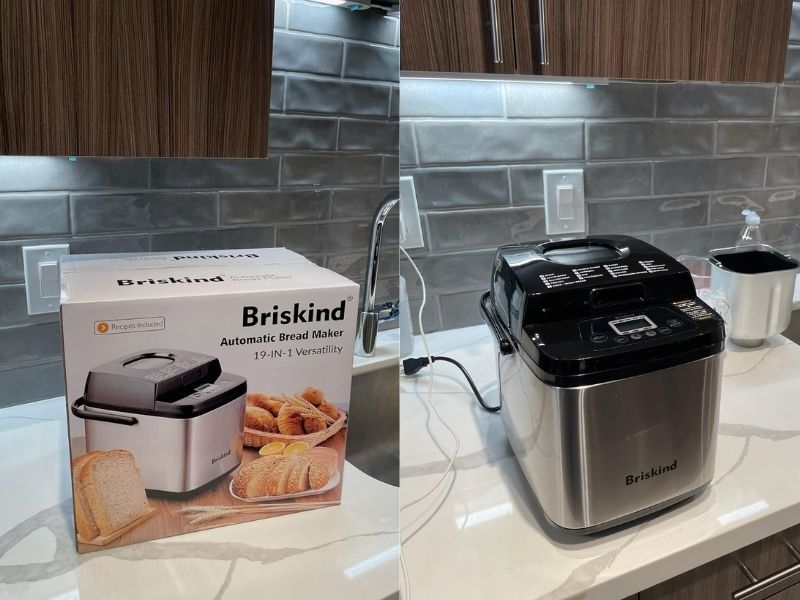
Right out of the box, it felt light and easy to move around. The setup was straightforward, and I liked how the controls were simple and clearly labeled. It doesn’t look fancy, but it feels practical — exactly what you want from a compact appliance. It’s also surprisingly versatile for its size. I love that it offers both 1 lb and 1.5 lb loaf options — just enough to stay fresh without wasting bread.
Compact footprint that’s light and easy to move around. There’s even a centered handle that makes it easy to lift.
Quiet operation — it runs smoothly without rattling or shaking, which is great for small apartments.
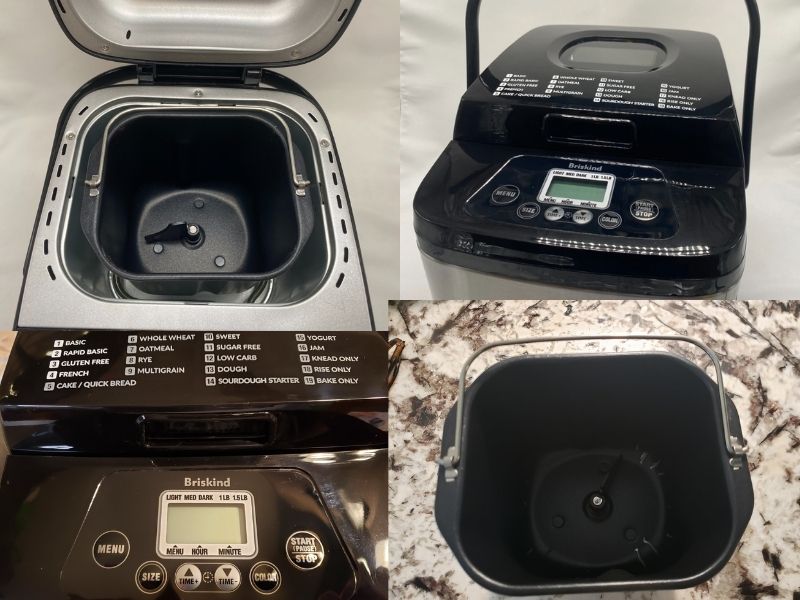
Simple, intuitive controls with 19 preset programs, adjustable crust settings, loaf sizes, and delay/keep-warm options.
Great value for the price. I bought it on sale and honestly felt like I got a bargain compared to bigger-name machines.
Right out of the box, it felt light and easy to move around.
Design & Key Features – Briskind Compact Bread Maker Review
When it comes to design, the Briskind Compact Bread Maker Machine really lives up to its name. It’s built to save counter space without feeling flimsy or stripped down. The design is clean, vertical, and practical — perfect for tight kitchens, RVs, or anyone who wants homemade bread without giving up half their countertop.
Physical / Build
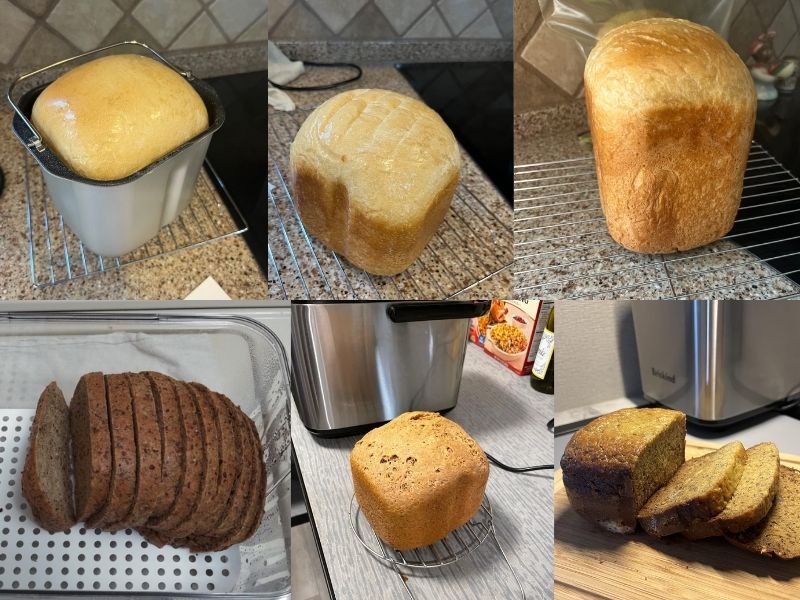
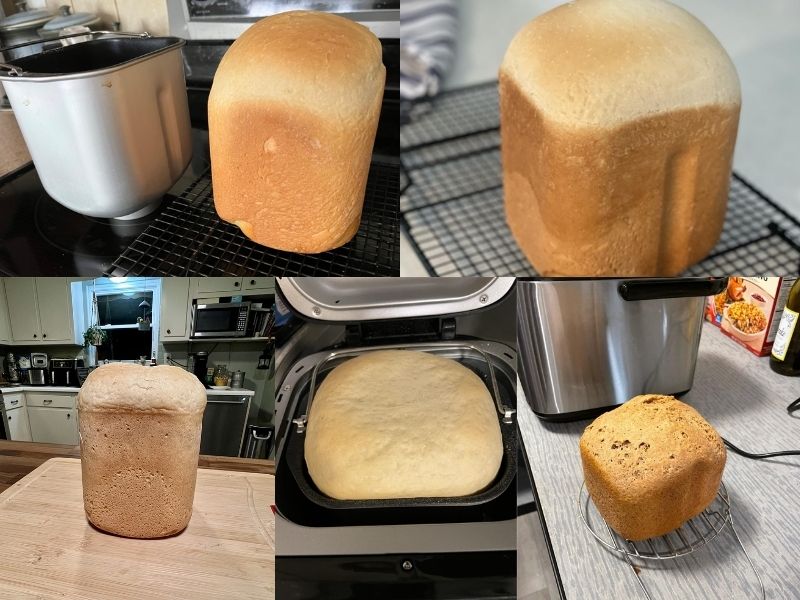
Compact vertical loaf design, which means the loaves come out taller and narrower rather than wide like traditional sandwich loaves.
It’s lightweight but sturdy, and it doesn’t slide around on the counter while kneading.
There’s a small viewing window on the lid. It’s nice to peek through at first, but it does steam up while baking, and sometimes a bit of condensation drips from it.
The lid doesn’t always seat perfectly — it can rest slightly on a ledge if you’re not careful, so I make sure it’s closed firmly before starting a cycle.
Loaf Size & Crust
Offers two loaf sizes: 1 lb and 1.5 lb. I mostly use the 1 lb size since it’s ideal for one or two people and cuts down on waste.
Three crust settings — light, medium, and dark. I’ve noticed the top doesn’t always brown as evenly as the sides, and the crust tends to be thinner than what you’d get from an oven bake, but still tasty and soft.
Programs & Functionality
Includes 19 preprogrammed settings, covering everything from white and whole wheat to French, gluten-free, pizza dough, jam, and even yogurt.
The delay start and keep warm options are super handy. Just note that the delay timer doesn’t mix or proof until it starts the actual program — it just holds ingredients until it’s time.
I’ve successfully made jam and yogurt with it; jam turns out great, though the yogurt results can vary depending on milk type and timing.
The dough-only cycles are perfect for pizza, rolls, or cinnamon buns — I use them a lot.
Accessories & Extras
Comes with everything you need: 1 kneading paddle (plus a spare), 2 measuring cups, 2 measuring spoons, and a paddle retrieval tool.
It also includes a 2-year warranty, which is a nice bonus since many competitors only offer one.
The nonstick bread pan makes cleanup easy, though a few people have mentioned the coating can show wear over time if you scrub too hard.
Capacity Limits
I’ve found it performs best when sticking to 1–1.5 lb recipes. Anything needing more than about 2 cups of flour tends to push its limits. Keeping recipes within the recommended range ensures the dough mixes and rises properly.
Overall, the Briskind’s design is compact and practical without feeling cheap. It’s clearly built for small households or anyone who wants fresh, homemade bread without a machine that dominates the kitchen.
Ease of Use
This is where the Briskind Compact Bread Maker really shines — it’s one of the easiest machines I’ve used so far. Everything about it feels straightforward and beginner-friendly, which is exactly what I was hoping for.
I love how it’s truly a “dump and go” kind of machine. I just add the ingredients in the order listed, pick the loaf size and program, press start, and that’s it. No extra steps, no fuss.
It’s surprisingly quiet — I can run it early in the morning or late at night and it doesn’t disturb anyone. Even during kneading, it’s just a soft hum.
Cleaning is easy. The bread pan lifts out smoothly, and the paddles are removable, so I just rinse and wipe them down. No stuck-on messes. The pan is a little thin, so I handle it carefully, but it hasn’t warped or chipped.
The instruction and recipe booklet is actually pretty useful. It explains everything clearly, including which order to add ingredients. I started with the included recipes, then moved on to online ones from Bread Dad and King Arthur Baking once I got more confident.
That said, there are a few small quirks worth mentioning:
The bread pan was a bit tight at first — it didn’t slide in and out smoothly for the first few uses, especially when hot. It loosened up after a couple of weeks, but I still use gloves when removing it.
The kneading paddle usually stays inside the loaf after baking, leaving a small hole in the bottom. That’s pretty normal for most bread machines. I use the included hook to pull it out, or sometimes remove the paddle before the final rise to avoid the hole.
The viewing window on top fogs up quickly once baking starts, so you can’t see much inside after the first few minutes.
I did get a slight plastic smell during my first bake. It went away completely after I ran the machine empty for about 10 minutes to burn off the factory oils.
Overall, I’d say the Briskind is very user-friendly, quiet, and simple to maintain, with only a few minor quirks that are easy to work around once you’ve used it a couple of times.
This is where things really come down to how the Briskind Compact Bread Maker performs — what the bread actually looks, feels, and tastes like. After a few weeks of experimenting, I can say it delivers consistently solid results once you understand its quirks.
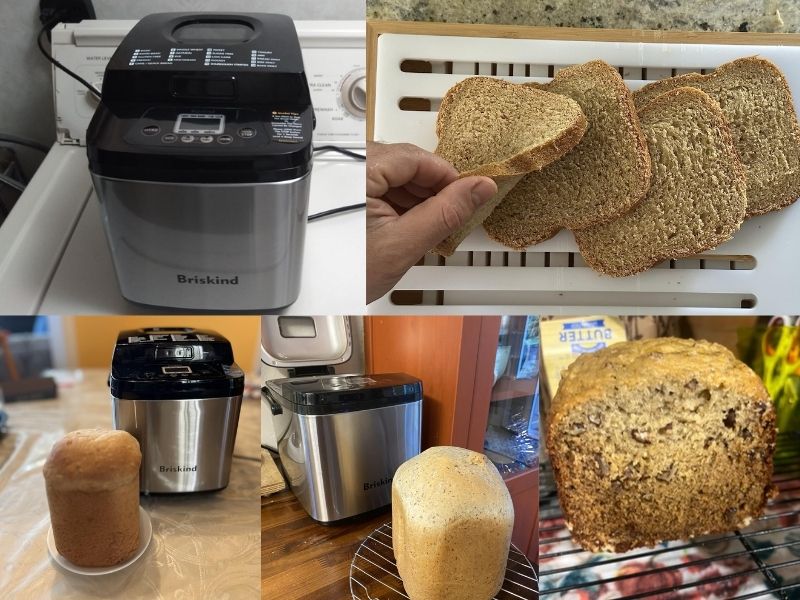
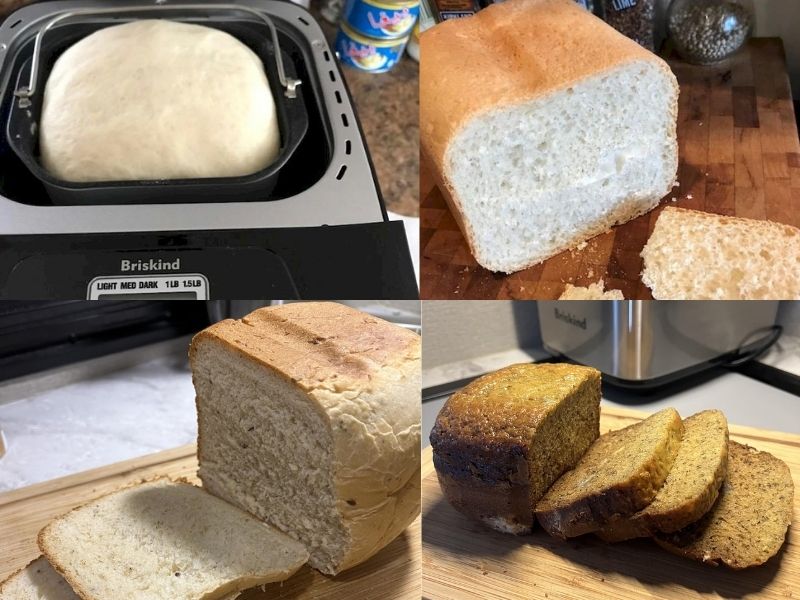
For basic white bread, it turns out soft, slightly dense, and perfect for sandwiches or toast. As long as I follow the recipe closely, it rises evenly and slices cleanly without crumbling.
The light whole wheat loaf (a mix of all-purpose and whole wheat flour) is another winner — hearty, smooth, and dense but still pliable enough for sandwiches.
When I went for 100% whole wheat, the loaf came out denser, which I expected. The flavor was great though — a strong, nutty whole-grain taste that feels like a true homemade bread.
I’ve also used the pizza dough cycle several times, and it’s one of my favorite functions. The dough mixes beautifully, comes out elastic, and is easy to shape or freeze for later use.
The jam setting was a surprise hit — my first batch of strawberry jam turned out thick, glossy, and flavorful. It’s one of those “bonus” features that actually works.
Yogurt making is possible, though a bit hit-or-miss. My first try ended up too runny, but I’ve read that timing and temperature matter a lot here, so it’s not the machine’s fault entirely.
There are, of course, a few small issues that showed up during testing:
Dense loaves can happen occasionally, usually when the water temperature isn’t right or if the lid isn’t fully seated. Once I started double-checking both, my results improved dramatically.
Top browning is sometimes uneven. The sides and bottom come out golden, but the top can look pale. It’s purely cosmetic — the texture and flavor stay great.
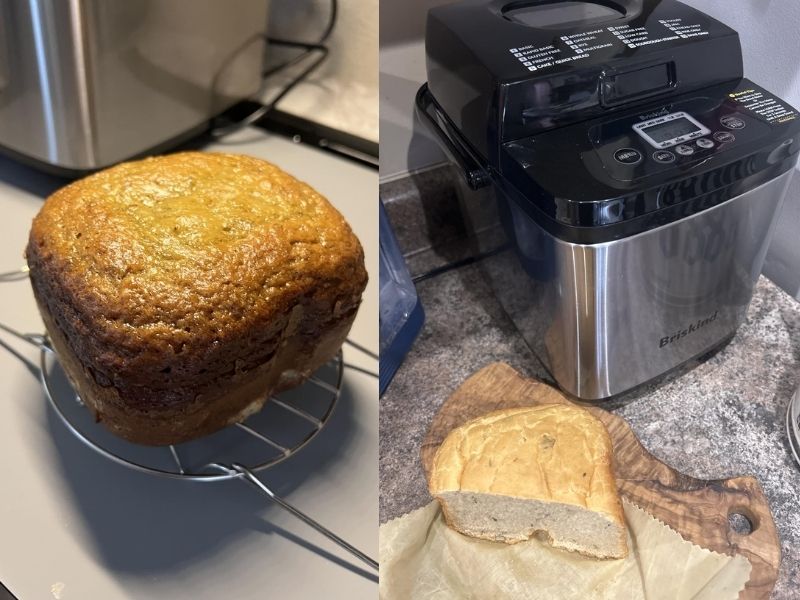
Gluten-free recipes are not its strong point. I tried once, and the loaf came out gummy and heavy. The Briskind seems to perform best with standard wheat-based recipes.
A couple of times, especially with 1.5 lb loaves, my bread rose so high it touched the lid. It made removal awkward and left a sticky patch on the glass window. I’ve since learned to reduce yeast slightly for larger recipes.
I did notice minor wear on the nonstick coating after several uses. I switched to using a silicone spatula and soft sponge, and it hasn’t gotten worse. One reviewer said they got a quick replacement when this happened, which is reassuring.
Some interesting practices came from experimenting:
A few times, I’ve stopped the baking cycle early and finished the loaf in the oven to get a more traditional crust. It works, but honestly, it’s not worth the trouble — the machine’s own bake cycle is good enough for everyday bread.
Weighing ingredients instead of using cups made a noticeable difference. A kitchen scale and good flour (like King Arthur) helped me get consistent, fluffy loaves every time.
Overall, the performance is impressive for such a compact machine. As long as recipes stay within its 1–1.5 lb range and you pay attention to water temperature and lid placement, the Briskind produces bread that tastes homemade in the best way possible.
These came directly from multiple reviewers — follow them to improve results:
Weigh ingredients. Use a digital scale — this made the biggest difference for many users (included cups are less accurate).
Water temperature: some users had great results using ~100°F (about 37–40°C) instead of the booklet’s 77°F suggestion — especially for whole wheat. (Adjust per yeast type and environment.)
Use instant/“bread” yeast (many recommend instant/”instant” yeast rather than active dry unless recipe calls for it). Some readers noted “rapid” vs “original” yeast differences — check your yeast type.
Remove kneading paddle before final rise if you want to avoid the large slit/hole. Open at the end of the second knead and pull it out carefully with the retriever.
Lightly oil/coat the paddle or pan edges with cooking spray to reduce sticking (many reported this helped).
Pre-run or 10-minute burn before first bake to remove factory oils — recommended in the manual and by users who noticed odd initial flavors.
If using Delay start: give the ingredients a quick stir (or mix briefly) if using long delay; the machine’s delay may not sufficiently mix everything and can give flat loaves otherwise.
Start with the included recipes, then try trusted sources (Bread Dad, King Arthur, online community recipes) — the included book is okay but many users tweaked recipes for better texture.
Don’t overfill — if the dough threatens the lid/window, reduce the recipe or use 1 lb setting.
Freeze in slices: small loaves freeze well; slice and freeze for easy use and reduced waste.
If you want a more traditional crust: finish the loaf briefly in an oven (optional) — but for most people it’s not worth extra effort.
Real User Recipe Highlight (Diabetic-Friendly Recipe)
One thing I really liked about reading other people’s experiences with the Briskind Compact Bread Maker is how creative users got with it. One reviewer shared a recipe they said helped them manage their blood sugar levels better. I tried it out of curiosity, and while I can’t make any health claims, it actually turned out really good — a hearty, dense, slightly nutty loaf that still felt like real bread.
Here’s the exact recipe they shared (I’m including it as reported — test and adjust to your own needs):
1 cup warm water
2 lightly beaten eggs
2 Tbsp room-temperature butter
1 cup vital wheat gluten
½ cup flaxseed meal
½ cup oat fiber
1 tsp baking powder
1 Tbsp instant yeast (original/traditional, not rapid-rise)
Optional: 1 tsp salt
Method: Add the wet ingredients (water, eggs, butter) first, then sprinkle in the yeast, and finally add the dry ingredients. Choose the basic/original setting with a medium crust. The key is to measure everything precisely, especially since the Briskind works best with specific ingredient ratios. The user (and others who tried it) reported consistent success with this recipe — it bakes up dense but sliceable and works great for sandwiches.
Troubleshooting & Fixes
Like any small appliance, the Briskind isn’t without its quirks. What impressed me, though, is how easy most issues are to fix once you understand what’s happening. Here are some real troubleshooting cases I came across, along with what worked for people (including me):
Coating wearing off: One user said their nonstick coating started to flake after just a few uses and initially got no support. Later, they updated that the vendor reached out and offered a refund or replacement — so if this happens, it’s worth contacting the seller directly. A few had better luck going through Amazon to reach Briskind support.
Dense loaves: This is one of the most common beginner issues. The fix is usually simple — use a kitchen scale for accuracy, adjust the water temperature (lukewarm, not hot), or try a proven recipe from Bread Dad or King Arthur. Some people also had success adding a bit of dough conditioner.
Yogurt too runny: If you’re trying the yogurt function, increase the incubation time or make sure you’re using a high-quality starter and milk with enough fat content. Once I did that, it came out much thicker.
Gluten-free bread issues: The Briskind struggles with gluten-free doughs, mostly because it’s a compact model. If you’re serious about GF baking, you’ll probably get better results using a larger bread maker or recipes specifically adapted for small GF cycles by experienced bakers.
Final Verdict — Who This Is Ideal For?
After spending time with the Briskind Compact Bread Maker, I can honestly say it’s a great little machine for the right type of baker. It’s not perfect, but it’s practical, compact, and does exactly what it promises — simple, consistent homemade bread without taking over your kitchen.
Buy this if:
You want a small, affordable bread maker that’s ideal for one or two people.
You value convenience — just load ingredients, pick a program, and come back to a warm, fresh loaf.
You’d enjoy extra features like dough, jam, and yogurt in one compact machine.
You bake regularly but prefer smaller loaves and don’t want a bulky, full-sized unit.
You need to bake large loaves or recipes that use more than about two cups of flour.
You want perfect gluten-free bread straight from the machine — this model’s GF results are hit-or-miss.
You’re particular about pan materials and want stainless steel or thicker nonstick coatings that last for years.
Bottom Line: For the price and small footprint, the Briskind Compact Bread Maker is an excellent everyday choice for casual bakers and small households. It reliably produces tasty 1 lb and 1.5 lb loaves, runs quietly, and genuinely adds value beyond bread — especially with its jam and dough functions. The tradeoffs are minor: a paddle hole in the bottom of loaves, some uneven browning, and occasional coating wear. But with a few small tweaks — weigh your ingredients, lightly oil the paddle, and remove it before the final rise — this machine easily becomes a dependable, low-hassle part of your kitchen routine.


Leave a Reply