
Disclosure: This post contains affiliate links. As an Amazon Associate I earn from qualifying purchases, at no extra cost to you. Read our full disclosure.
If you’ve read our Elite Gourmet bread maker review, you already know the brand’s formula: simple appliances that do the basics well for a low price. The Elite Gourmet EFD319 Food Dehydrator follows the same formula. It’s one of the most-bought budget dehydrators in the US, with around 9,000 owner ratings averaging about 4.4 out of 5, and it usually costs around $40.
Dehydrating fits naturally into a home baker’s kitchen. Dried apples, cranberries and tomatoes go straight into breads and focaccia, and homemade fruit leather or banana chips make great snacks. In this Elite Gourmet dehydrator review, we look at what the EFD319 does well, where its limits are, and how to get the best results from it.
How we put this review together: we haven’t found independent lab testing of the EFD319. This review is based on Elite Gourmet’s specifications, patterns in thousands of owner reviews, and general food-drying practice, including USDA guidance on jerky.
Elite Gourmet EFD319 at a Glance
| Spec | Detail |
|---|---|
| Trays | 5 stackable BPA-free trays |
| Size | About 11.4 x 11.4 x 8.5 in |
| Power | 350W |
| Temperature | Adjustable, 95°F to 158°F |
| Airflow | Vertical (heater and fan in the base) |
| Controls | Temperature dial |
| Typical price | About $35–$45 |
Quick verdict: The Elite Gourmet EFD319 is a good starter dehydrator for fruit, vegetables and herbs. It’s compact, quiet and inexpensive, and owners like how easy it is to clean. It’s slow with thick or watery foods, the trays need rotating for even drying, and its 158°F maximum is below the 160°F the USDA recommends for meat jerky. If jerky is your main goal, choose a dehydrator that reaches 165°F.
Key Features
5 Stackable BPA-Free Trays
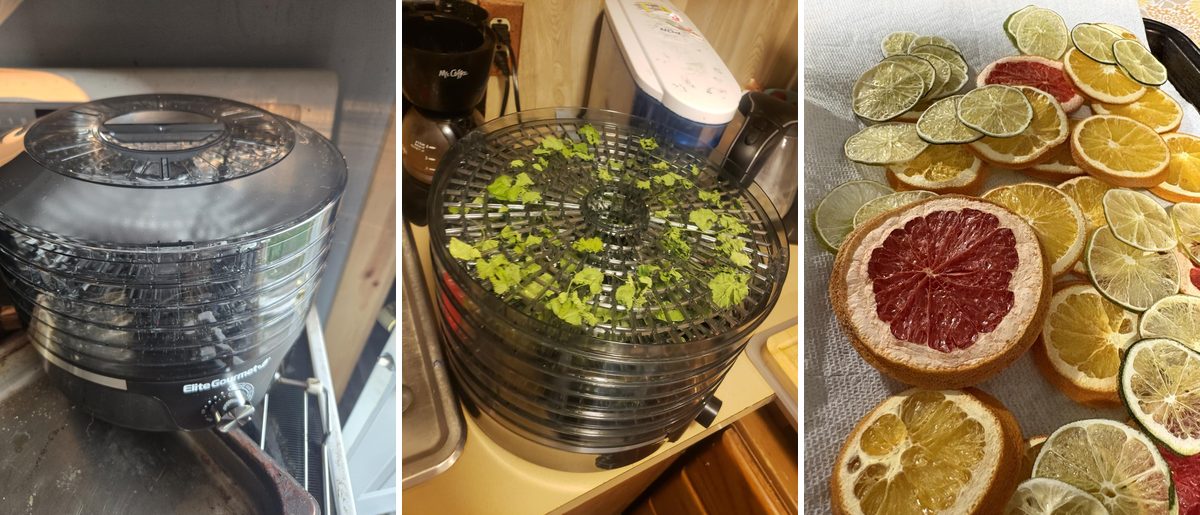
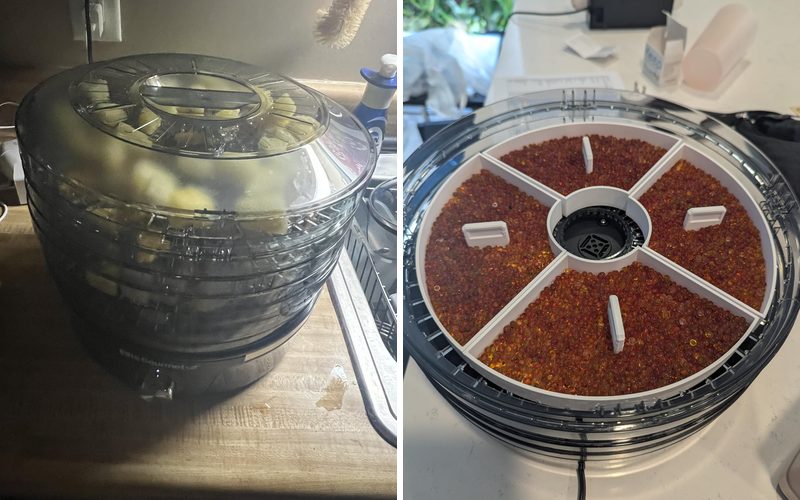
Five round trays give you a reasonable amount of drying space for a small household: a couple of sliced apples per tray, or a big bunch of herbs across the stack. The trays are clear, so you can check progress without lifting the lid.
Adjustable Temperature: 95°F to 158°F
The dial covers the useful range for most home drying:
| Food | Typical Temperature |
|---|---|
| Herbs and flowers | 95–115°F |
| Fruit leather, fruit | 125–135°F |
| Vegetables | 125–140°F |
| Yogurt (yes, you can) | About 110°F |
| Meat jerky | 160°F+ (beyond the EFD319’s range, see below) |
Vertical Airflow
The heating element and fan sit in the base and blow warm air up through the stack. This design is compact and affordable, but it has one well-known side effect: trays closest to the heat dry faster. Rotating the trays every few hours solves it.
Compact and Quiet
At about 11.4 inches across, it fits on a corner of the counter and stores easily. Owners frequently mention that it runs quietly, which matters when a batch takes 8–12 hours.
What It Dries Well
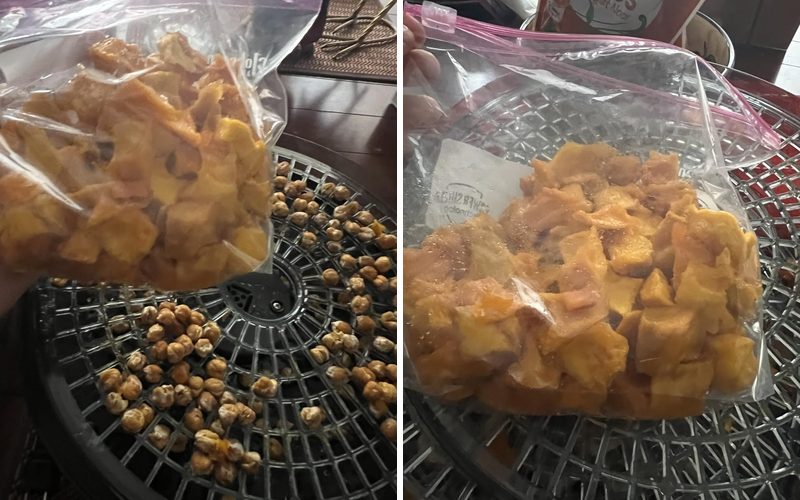
- Apples, bananas, pears and strawberries. These are the bread-friendly favorites. Slice them evenly, about 1/4 inch.
- Herbs. The low end of the dial is ideal for basil, parsley, oregano and mint.
- Vegetables. Tomatoes, peppers, zucchini chips and mushrooms all work well.
- Fruit leather. Use the solid fruit-roll sheets if your set includes them, or line a tray with parchment cut to fit.
The Jerky Question
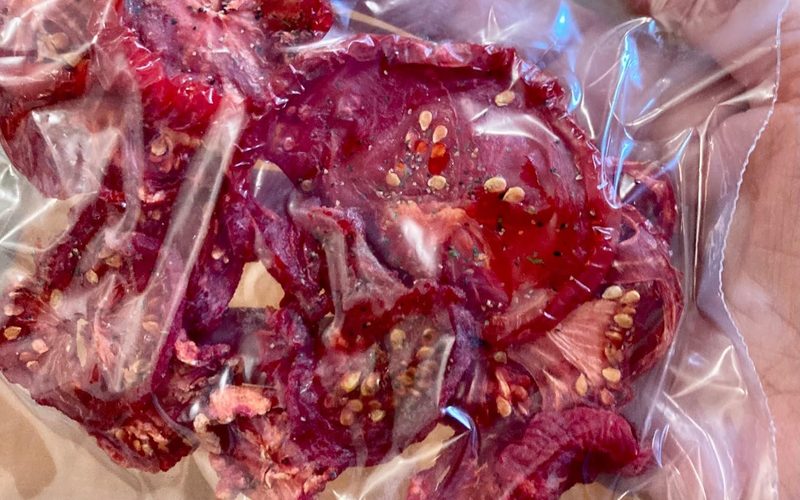
This is the most important thing to know before buying. The USDA recommends heating meat to 160°F (poultry to 165°F) before or during drying to make jerky safe. The EFD319 tops out at 158°F, and air temperature at the top of the stack is usually lower than at the dial.
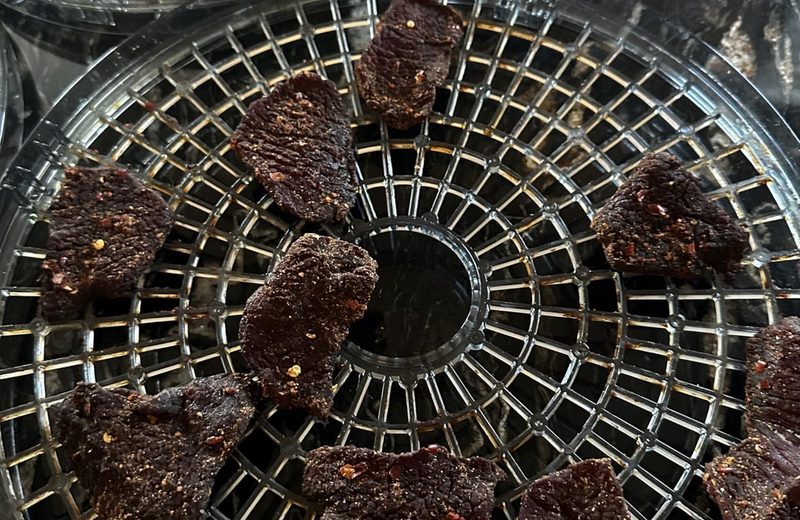
That doesn’t mean owners don’t make jerky in it. Many do, and some report very long drying times. If you want to use it for jerky, the safer method is to pre-cook the marinated meat strips in the oven to an internal temperature of 160°F, then finish drying them in the dehydrator. If jerky is your main reason for buying, a dehydrator that reaches 165°F is the better choice.
What Owners Say
What owners like:
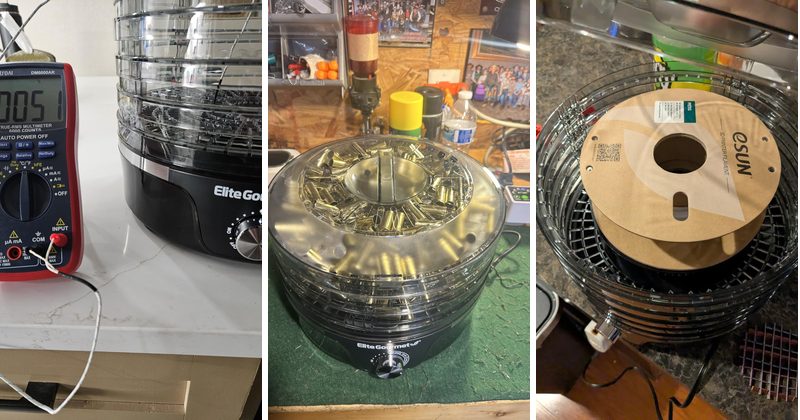
- Good value for a first dehydrator
- Quiet during long runs
- Easy to clean trays
- Compact and easy to store
Common complaints:
- Slow drying, especially for thick or juicy foods
- Uneven drying between top and bottom trays without rotation
- Low maximum temperature for jerky
- A plastic smell on first use. Owners recommend running it empty on high for about 30 minutes before the first batch.
Tips for Better Results
- Run it empty for 30 minutes before your first batch to burn off any manufacturing smell.
- Slice evenly. A mandoline makes a big difference. Uneven slices dry at different rates.
- Pre-treat light fruits like apples and pears with lemon juice to stop browning.
- Don’t overlap pieces. Air needs to move around each slice.
- Rotate the trays every 2–3 hours, moving the bottom tray to the top.
- Test for doneness when cool. Fruit should feel leathery with no moist spots. Vegetables should be brittle.
- Condition dried fruit. Pack it loosely in a jar for a week and shake daily. If you see condensation, dry it longer.
What We Like (Pros)
- Low price with strong owner ratings
- Adjustable temperature from 95°F to 158°F
- Quiet operation
- Compact footprint
- Easy to clean BPA-free trays
- Great for fruit, vegetables and herbs
What Could Be Better (Cons)
- 158°F maximum is below USDA guidance for jerky
- Uneven drying without tray rotation
- Slow with thick or juicy foods
- Small drying area for big harvests
- No independent lab testing
Elite Gourmet EFD319 vs. Other Dehydrator Types
| Dehydrator Type | Example | Max Temp | Airflow | Best For |
|---|---|---|---|---|
| Budget round, vertical | Elite Gourmet EFD319 | 158°F | Bottom-up | Fruit, veggies and herbs on a budget |
| Mid-range round, vertical | Nesco-style units | Often 160°F | Top or bottom | Jerky makers who want round trays |
| Box shelf, horizontal | Magic Mill, COSORI | Often 165°F | Rear fan | Even drying, jerky, big batches |
When to pay more: if you plan to make jerky regularly, dry large harvests, or hate rotating trays, a box-style dehydrator with a rear fan and a 165°F maximum is worth the extra money. For occasional fruit and herb drying, the EFD319 does the job for much less.
Who Should (and Shouldn’t) Buy the EFD319?
It’s a good fit if you:
- Want to try dehydrating without spending much
- Mostly dry fruit, vegetables and herbs
- Want dried fruit and tomatoes for your breads
- Have limited counter or storage space
Look elsewhere if you:
- Mainly want to make meat jerky
- Dry large amounts at once
- Don’t want to rotate trays
Frequently Asked Questions
Is the Elite Gourmet food dehydrator good?
For the price, yes. It’s a simple, quiet, compact dehydrator that owners rate highly for fruit, vegetables and herbs. Its limits are slow and uneven drying without rotation, and a maximum temperature that’s too low for jerky by USDA guidance.
Can you make jerky in the Elite Gourmet EFD319?
Its maximum is 158°F, below the USDA’s 160°F recommendation for meat. If you want to use it for jerky, pre-cook the meat strips in the oven to an internal temperature of 160°F first, then finish drying them in the dehydrator.
Do I need to rotate the trays?
Yes. Heat comes from the base, so lower trays dry faster. Rotate them every 2–3 hours for even results.
How long does it take to dry apples in the EFD319?
Usually 6–12 hours at around 135°F, depending on slice thickness and humidity.
Why does my new dehydrator smell like plastic?
That’s common with new appliances. Run it empty on the highest setting for about 30 minutes before the first use.
Are the Elite Gourmet dehydrator trays dishwasher safe?
Check your manual. Many owners hand-wash the trays in warm soapy water to keep them in good shape.
Final Thoughts
The Elite Gourmet EFD319 is an easy, low-cost way to start dehydrating at home. It’s quiet, compact and good at the jobs most beginners have in mind: apple chips, dried herbs, sun-dried-style tomatoes and fruit for your bread. Rotate the trays, slice evenly and be patient, and it will reward you.
Just don’t buy it as a jerky machine. Its temperature ceiling falls short of food-safety guidance for meat, so jerky fans should spend a bit more on a dehydrator that reaches 165°F.
Our rating: 7.5/10 for fruit, vegetables and herbs. 5/10 as a jerky dehydrator.
Leave a Reply